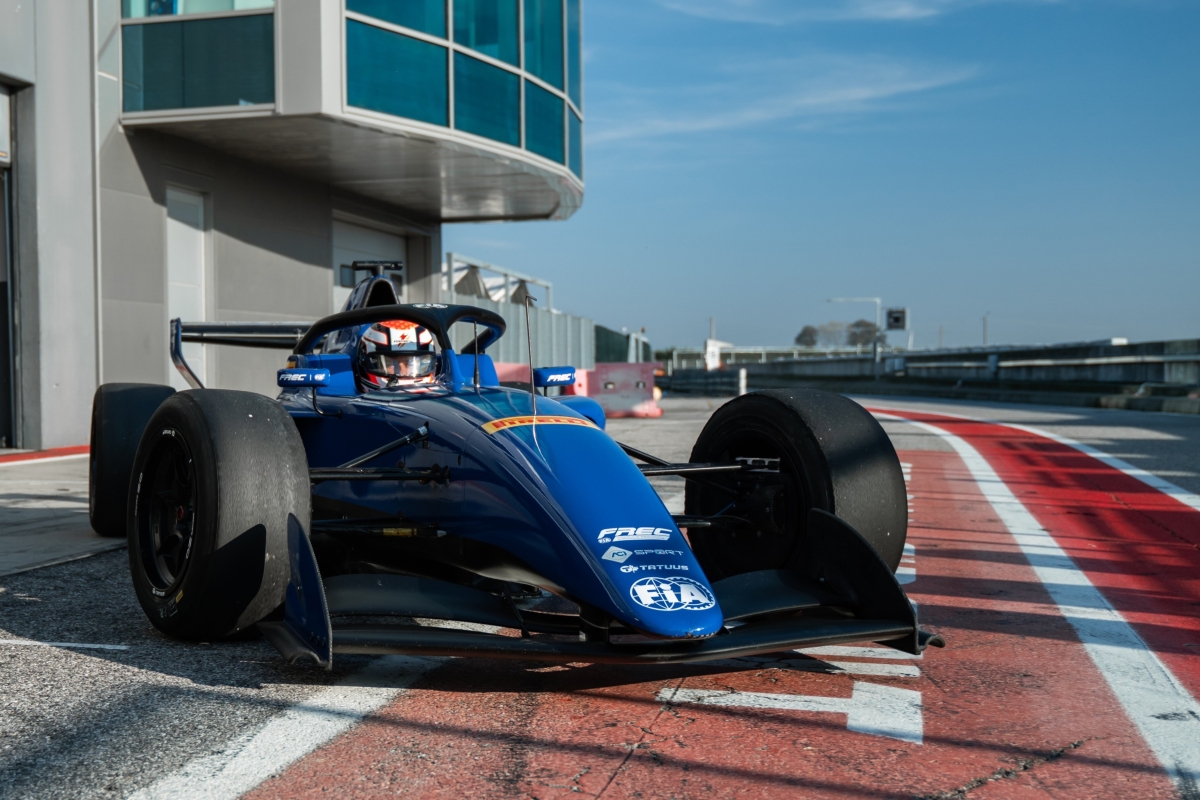
Photos: Tatuus
The glint of a proud father was evident in the eyes of Tatuus’s CEO Giovanni Delfino when he spoke to Formula Scout about the company’s FRegional Gen2 car, the T-326, during its public unveiling at Monza
“The car’s look is exactly what we wanted to achieve. The overall package, the line of the car, the aero that you can feel looking at the car. I like it very much. So, it’s not a single detail, but it’s the overall look of the car which I like,” says Giovanni Delfino as he discusses the design of the new Tatuus T-326 to Formula Scout at the car’s launch.
Tatuus and its northern Italian rival Dallara have come to dominate the global market for single-seater chassis. While Dallara has plenty of contracts in the top three tiers, Tatuus has built its niche in Formula Regional and Formula 4.
The T-326 is Tatuus’s second-generation FRegional car and succeeds the T-318, which had been in use since the category’s inception in 2018. Its introduction was delayed by 12 months to 2026, ostensibly on grounds of cost, with the FIA keen to get international alignment ahead of a unified global rollout. It can be said its arrival now comes not a moment too soon, as Tatuus’s newer fourth-tier single-seaters for Eurocup-3 and GB3 has led to the T-318 showing its age.
FRegional’s European Championship and Middle East Trophy will adopt the T-326 straight away, and a deal with FRegional Oceania for after 2026 is expected to complete the global picture.
Nicolas Caillol, motorsport manager for FRegional Oceania’s promoter Toyota Gazoo Racing New Zealand, told Formula Scout earlier this year that staying with Tatuus would be a “no-brainer” given their 20-year history together that began with the preceding Toyota Racing Series. “They’ve been a great partner from the start so there’s no reason [to] change.”
Tatuus will update GB3’s new-for-2025 car next year, while Eurocup-3 adopts Dallara chassis to become a third-tier series.
Delfino is convinced that the development of the T-326, undertaken “in strong co-operation with the FIA”, represents a major step forward for FRegional in safety, performance and drivability.
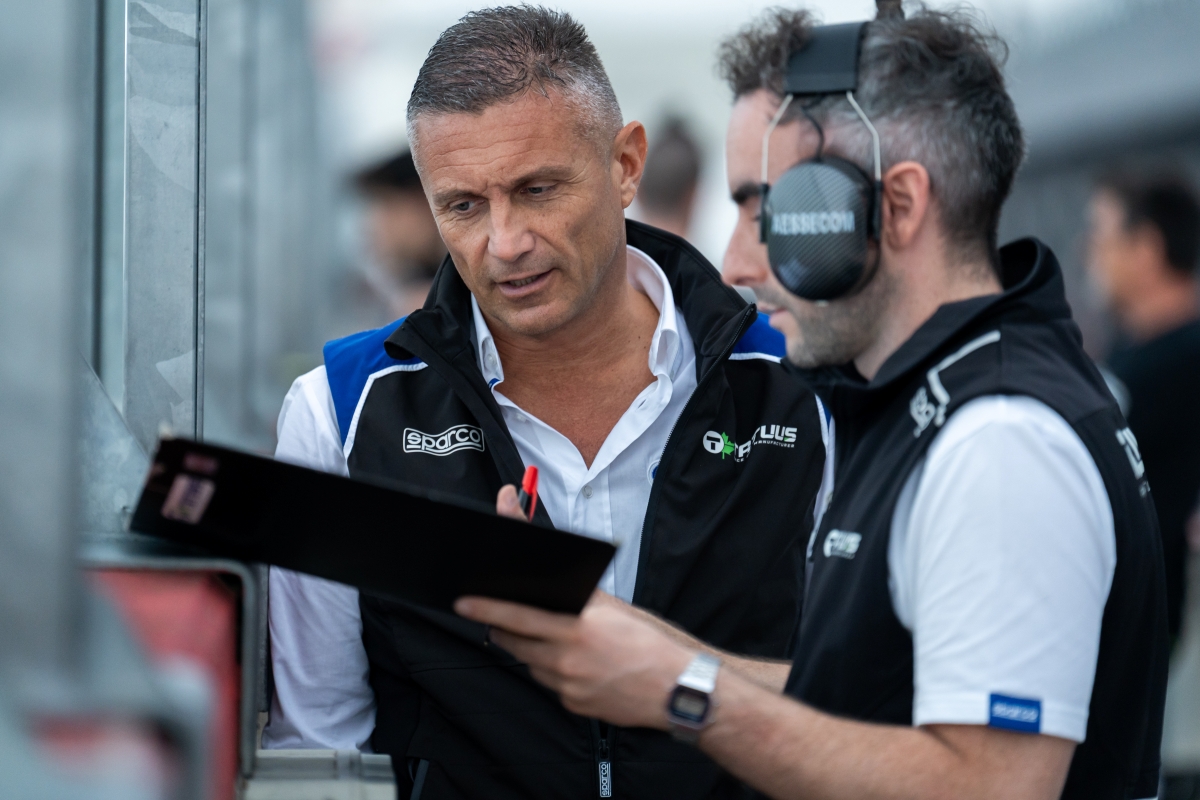
Giovanni Delfino
“What we have done has been decided together with the FIA, because in reality FREC will be a full FIA championship, so we are really committed to have the best car we can do in terms of performance, reliability and safety. But I would say safety first,” Delfino explains.
It’s not a buzzword; safety’s embedded in every aspect of the car’s design from the chassis to the attached crash structures.
“Safety for me is the complete chassis, so the complete line, starting from the chassis itself, the nose and the rear crash box. And so, we have been working to gain the best safety we can, while keeping the chassis as light as possible,” he adds.
Enhanced safety measures inevitably bring a weight trade-off and Delfino is at pains to emphasise the word ‘light’, not ‘lighter’, but concedes “the chassis itself is heavier than the old car”.
The T-326’s 15-inch wheels “weigh almost 20kg more than the 13-inch rims” on first-generation cars, but Tatuus has tried to compensate by making “the mechanical parts and the engine lighter; while the rest is more or less the same” as the T-318.
That car was frequently criticised for being heavy, unresponsive and sluggish, making wheel-to-wheel racing difficult. Delfino does not reject the criticism but stresses the importance of the car’s drivability for drivers’ perception of heaviness:
“I believe that drivers felt and said that the car was heavy, not because of the real weight of the car, but because of the effort you have to exert on the steering wheel to turn the car.”
Tatuus has addressed this with its T-326 design by focusing on refining the suspension geometry to make the steering “lighter” and the car more responsive to driver inputs. This follows adjustments made to the T-318 ahead of the 2024 season with similar aims, particularly to make the car more accessible for female drivers.
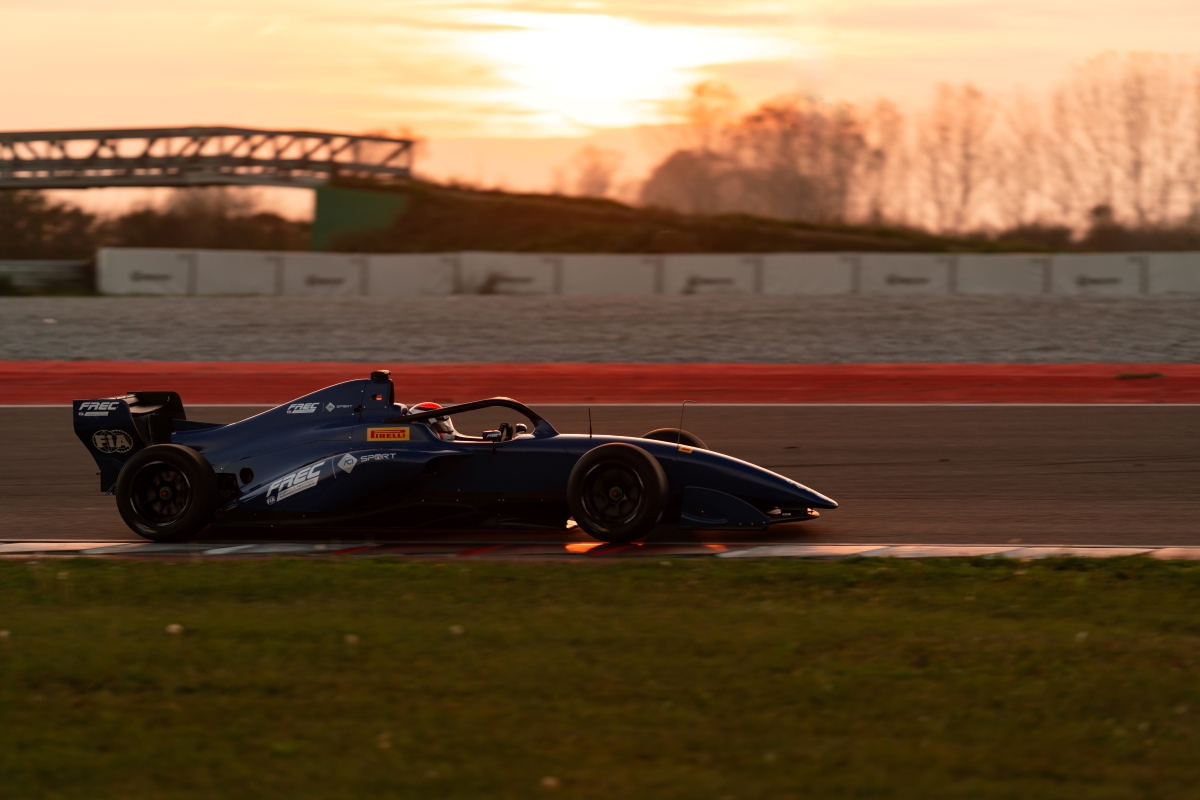 “The feeling from the driver is totally different. In our development phase, we asked Marta Garcia and Vicky Piria, both of whom have experience of driving the first generation, to drive the car and they say this is a totally different car to drive. So, result achieved, I would say,” Delfino reckons.
During the T-326’s early development stages, Tatuus president Gianfranco De Bellis told Formula Scout “while our main target is of course safety, after that [it was] to make a very nice car for the driver; a car that can transmit to the driver and to the team the right direction to improve the driver’s skills for the future”.
Within the framework of the FIA’s homlogation specifications for FRegional, Tatuus has also made significant improvements to the aerodynamics with the aim of reducing the ‘dirty air’ when following another car, thus making overtaking easier.
“The aerodynamics will be less sensitive to being behind [another car] so that will definitely be the main step to create more attractive racing. It is the same philosophy as Formula 1 that the [following] car suffers less turbulence affecting the aerodynamics,” explained De Bellis. “This has been the main point where we have worked for the new FRegional.”
Delfino has been keen to point out Tatuus did not use a full test team to develop the T-326, instead comparing its simulations to the data from running a single car on track: “So, we are not announcing that overtaking will be easier. But that is what our calculations say.”
Through this summer and autumn, Tatuus ran the prototype chassis at a variety of European circuits including Cremona, Cervesina, Vallelunga and Mugello in Italy as well as Paul Ricard and Magny-Cours in France.
In addition, Tatuus and the FIA made use of the 1.678-mile Catesby vehicle testing tunnel in England to provide further data to the design teams from both the constructor and the federation in optimising the car’s aerodynamics.
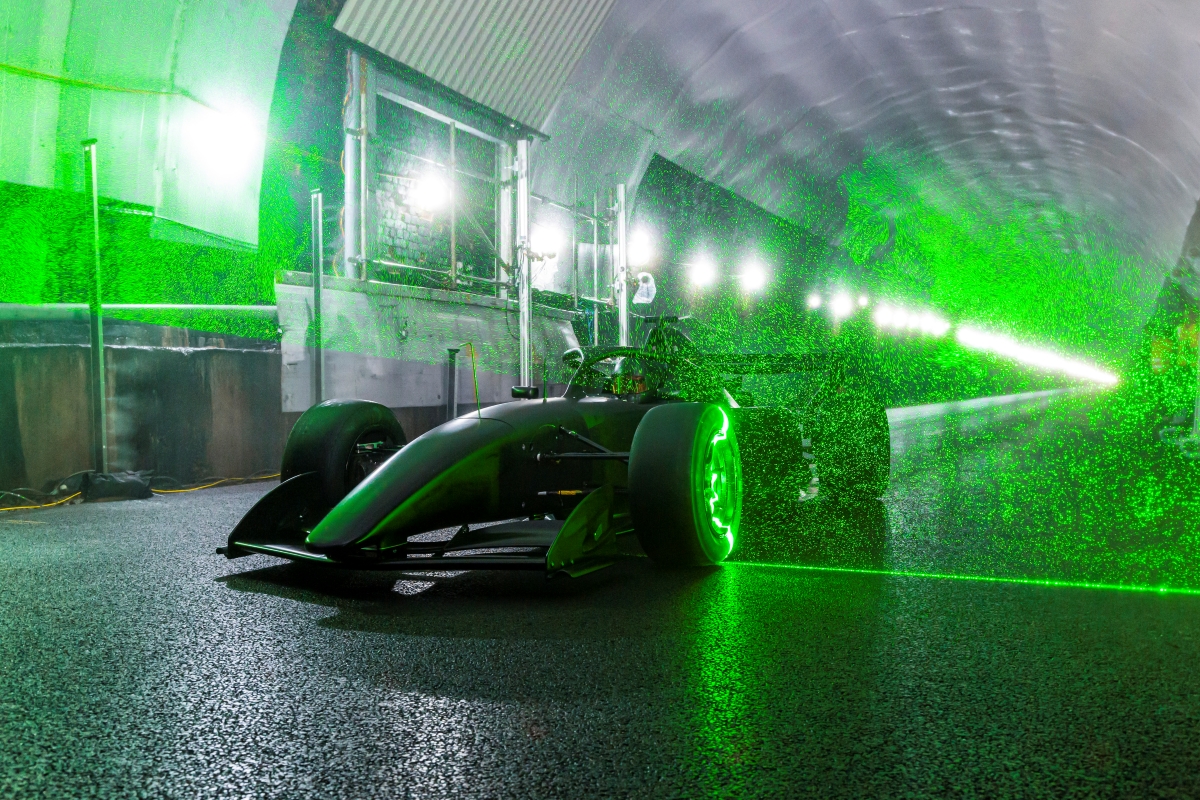
The T-326 prototype in the Catesby tunnel
Former Minardi F1 test driver Matteo Bobbi and Le Mans 24 Hours podium-finisher Lorenzo Colombo shared in the testing duties with Garcia and Piria, and were still putting the car through its paces at Cremona last month as teams were taking delivery of the first chassis off the production line.
Powering their laps of the track has been FRegional’s first ever three-cylinder engine, derived from a 1.6-litre Toyota G16E unit used in road cars that is also the basis of third-tier series Euroformula, Super Formula Lights and soon Eurocup-3’s engines.
The development work done by Autotecnica, which like Tatuus is part of the newly-created Korus Group, to prepare the engine for FRegional means the unit used will be called the ATM163T.
That means the end of FREC’s five-year run with Oreca-developed and Alpine-branded Renault engines, while the Autotecnica-built Alfa Romeo-based powerplant still used in FRME and the Macau Grand Prix will now be replaced.
Delfino reveals that “Autotecnica is the only manufacturer accredited by Toyota to homologate the engine for FRegional, ensuring consistency and reliability across all markets”, and actually worked closely with Japanese firm TOM’S after procuring the untuned units and spec parts from them.
It developed the engine for third-tier single-seaters, so a collaboration began “since they know the engine very well, so they have been supporting us wherever they can” and will continue to support Tatuus and Autotecnica going forward.
There is at least one party in Korus wanting TGR NZ to give up Toyota power in FRegional Oceania for Autotecnica’s new engines, and if such a deal was pursued on the other side of the globe it would require sharing responsibilities with TOM’S.
“We are willing to supply all the engines, but it would be not cost-effective for example to take care of all the rebuilds in the Asia-Pacific area,” Delfino says on behalf of Autotecnica. “That’s why working alongside TOM’S is a key factor: partnering with them means to guarantee time effective and efficient overall services to the teams.”
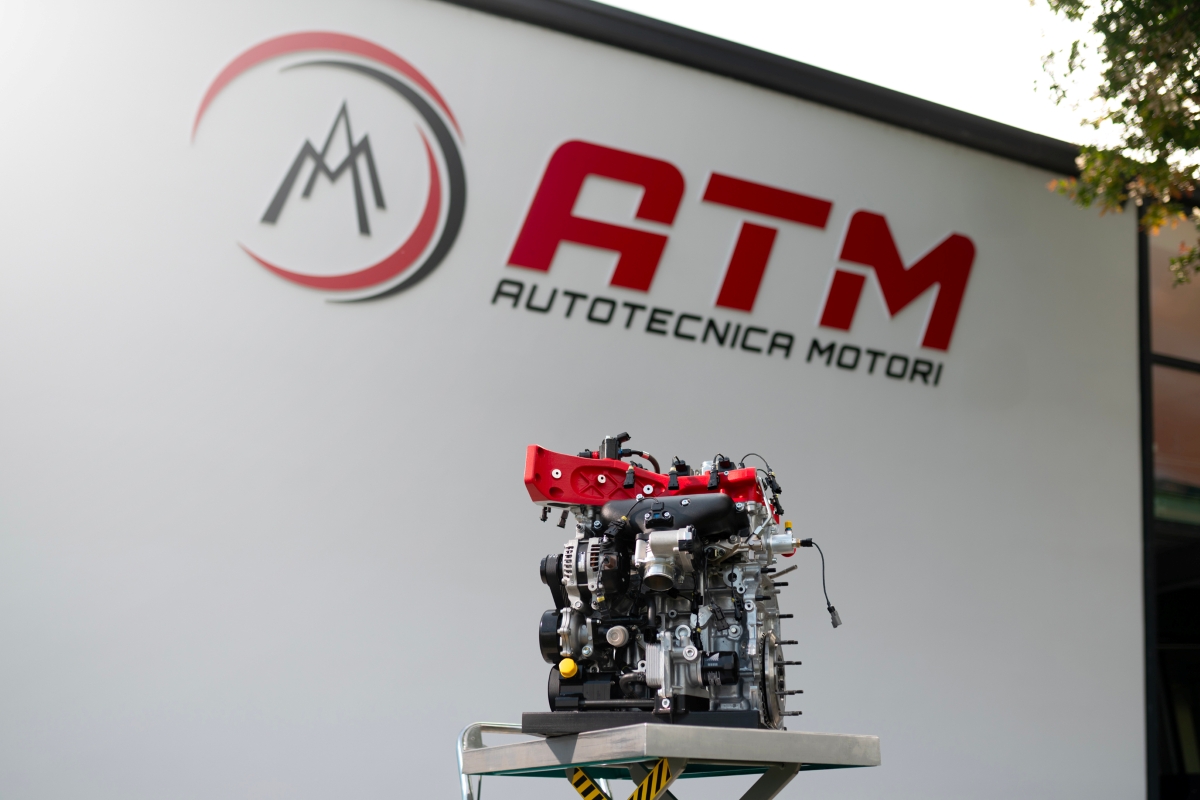
The ATM163T engine
With the T-326’s power-to-weight ratio having been limited by the FIA to 3.25kg/KW, Autotecnica’s freedom of movement has been limited but it has “been working a lot on the engine side to have the best performance”.
“Our engineers have been working on the dyno and on track to improve the drivability, the power curve and the torque curve and probably we can say right now that the perception and the feedback we have had from the drivers is that the engine is powerful enough,” Delfino adds. “When you activate the push-to-pass, I believe that there’s a strong difference between the current car and the new generation of car.”
Whatever might be said by them about safety, drivers still always seek more performance. So, what can be expected?
“We don’t develop cars in terms of performance,” stresses Delfino. “[That’s the job of] the teams which will be racing in the championships, but I believe that in Monza, we can be 1.5 to two seconds faster than the old generation. This is what we have been working to achieve.”
Third-tier championships FIA Formula 3 and Euroformula raced at Monza this year, as did FREC, Eurocup-3 in its FRegional-based form and GB3 which has moved further away from FRegional in technology and pace with its 2025 car. While GB3 targets lap records with upgrades for 2026, Delfino has not put a number on the scope of pace improvement there so if the target pace gain for the T-326 is achieved in real-world conditions it could place FREC above GB3.
Monza laptimes in 2025
| Series | Driver | Session | Laptime |
|---|---|---|---|
| FIA F3 Championship | Brad Benavides | Qualifying | 1m38.120s |
| Euroformula | Yevan David | Qualifying | 1m41.842s |
| GB3 | Alex Ninovic | Qualifying | 1m43.406s |
| FREC | Evan Giltaire | Free practice | 1m43.563s |
| Eurocup-3 | Ernesto Rivera | Qualifying | 1m46.611s |
Delfino says bringing chassis and engine companies together within Korus “has been a big, big advantage for us”, particularly with the challenge caused by the FIA’s late publication of homologation specifications for second-generation FRegional cars.
“[I don’t believe] that with different companies working alone, we would have achieved the same result. Being in the same group has given the fastest result possible to achieve to have a car running already in August for testing and at the same time building 30 cars to be delivered in November for the Middle East.”
Since the T-318’s introduction in 2018, Tatuus has been approached by its customers to develop variants on the base chassis for use in other championships. This includes Eurocup-3’s outgoing car and two generations of GB3 machinery. Clearly, Tatuus has been able to implement some of the lessons learned from those in the T-326.
“Obviously, every new car we design takes what we have done in the past as a reference and then we try to develop the car. So the new GB3, which has been a real platform that we are continuing to develop, is the base of the FRegional car.
“It helps a lot when you can develop cars with different shapes, but with the same skeleton, because you can develop the drawings, the design, the concept to achieve always the same results, which is an FIA-compliant car, but with a different level of engineering.”
GB3 promoter MotorSport Vision has not been bound by the strict requirements of the FIA’s regulations, giving Tatuus a freer hand in developing cars for use there. That has included more complex aero specifications and introducing the drag reduction system to 2025’s MSV GB3-025 car, but Delfino emphasises that “the chassis and the crashboxes were exactly compliant to the FIA regulations”.
Which raises the question: how frustrating is it for an innovative engineering firm to be boxed in by the demands of the governing body?
 Having the FIA in an active role, not only in providing the category’s updated technical specifications but also determining how it will help organise FREC from 2026 onwards, has increased the number of meetings and delayed the final specification of the car and that championship’s calendar.
“It has been a strong co-operation with FIA, but with the timing of FIA, in reality the technical regulations have been set really late during the development phase,” Delfino states. Nevertheless, he sees its greater involvement as “very positive”.
“For Tatuus and Autotecnica, it will be a very good thing to work with them and to have FIA people on track during the races. It gives the [European] championship and the manufacturers a greater credibility.
“We are working to have a reliable car, to have the performance we need, to have exciting races. Once we are on the same ship, we will help each other to achieve the results. So, if we need to do something more to [put] on the show that people want to see, I believe that working with the FIA people will be a positive aspect of this championship.”
Tatuus is in the business of designing, building and selling customer cars as a commercial operation. Engineering excellence is important, but it has to be achieved at a price that is affordable for its customers but profitable for its shareholders.
No easy feat, as countless constructors have discovered in the past.
Tatuus, Delfino says, only knows one way: striving for the highest standards of quality. “Our business model is quite clear: we don’t make any profit on the car. We try to develop the car, with the best parts, but obviously, we cannot spend much more than the price we can sell the car for.”
“Our business model works after the car sales, so it’s spare parts, it’s the championship, it’s track support which give us a good reputation, and the reason why the promoters we work with choose Tatuus.”
Junior single-seater series using Tatuus chassis in 2026
| Category | Championship | Car |
|---|---|---|
| USF Pro 2000 | IP-22 | |
| GB3 | MSV GB3-025 | |
| FRegional | Europe, Middle East | T-326 |
| FRegional | Oceania, AU3 | FT-60 |
| FRegional | Ultimate Cup Series FCup | T-318 |
| USF2000 | USF-22 | |
| GB4 | MSV GB4-025 | |
| USF Juniors, YACademy WS | JR-23 | |
| F4 | Brazilian, British, CEZ, Italian, NACAM, Saudi Arabian, SEA, SMP, Spanish, UAE | T-421 |
| F4 | AU4, E4, F1 Academy, FTrophy, FWinter Series | T-421 |
Alongside meeting the technical challenge, winning a supply tender depends on reputation, history and teams’ satisfaction.
Volume production and efficient supplier relationships are key to keeping costs down. Having projected the expected production volume for a new car, Tatuus can go to its own suppliers and tell them “okay, we have to keep a cost like that”.
“I think Tatuus is leading the market in terms of, let’s say, entry-level single-seater cars all over the world,” claims Delfino.
“The reason is that we design a car to be safety-first, easy to drive, reliable, cost-effective, and something that a team and the driver can trust. It is this complete package that keeps us on top of the market.”