Photo: Formula Motorsport Ltd
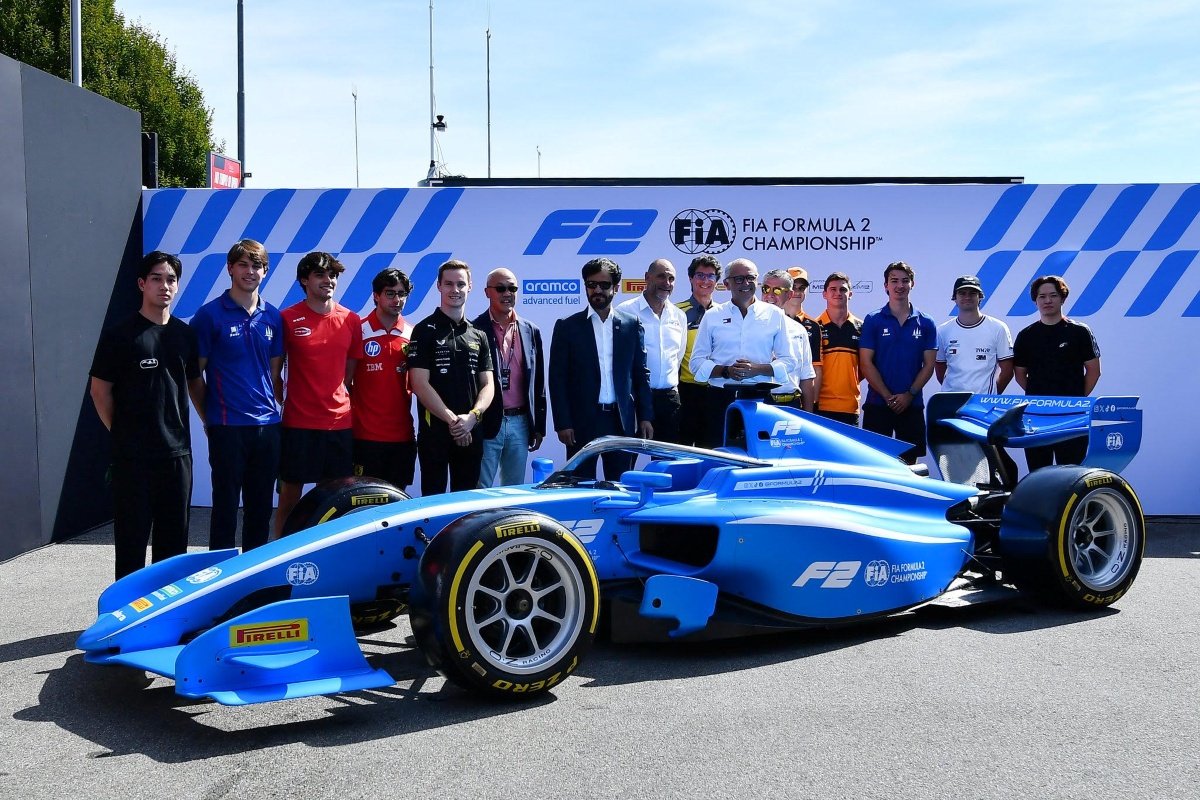
Formula 2 has unveiled a modified version of the Dallara F2 2024 car to take the championship through the 2027-2029 cycle.
According to F2 CEO Bruno Michel, the aim has been to “keep the costs managed, while bringing the design closer to the look of a Formula 1 car while enhancing the F2 car’s ability to deliver close racing.”
With the chassis, engine and tyres remaining unchanged “for cost reasons and to maintain the financial sustainability of the sport” according to Nicolas Tombazis, the FIA’s Single-Seater Director, the most significant change has been to the car’s aerodynamics, involving a redesign of the front and rear wings.
The version presented to teams and drivers at the car’s unveiling in the Monza paddock features a more traditional rear wing than the radical treatment of the current car, while the front wing endplates are squarer, with additional side winglets, in line with modern F1 designs.
Few details of the exact changes were made public, but Tombazis confirms that “the car does have … about 25 points of downforce and a bit more drag, three points. So, it’s fundamentally a much more efficient car dynamically, as well as having better characteristics for following other cars and being more similar to Formula 1, and hence a better proving ground for drivers learning, going up the ladder to get into F1.”
The dimensions of the car remain exactly as on the current car, with DRS being retained, even though F1 has dropped the overtaking aid in its own 2026 regulations. The 3.4 litre V6 turbocharged Mecachrome engine will continue to power the cars, which will run on sustainable fuel and Pirelli tyres.
The most notable change beneath the skin of the car is the addition of a starter motor, with the aim of reducing race interruptions caused by stalled cars on the track. Tombazis is confident the resulting weight increase will be more than compensated by the improved aerodynamics. The integration of the on-board starter system has required modifications to the gearbox.
Alpine test and reserve driver Paul Aron has already put the car through its paces at the Hungaroring, commenting favourably on the increased downforce.
F2 will continue to develop the car, both on-track and in the windtunnel, before delivering a first car to teams before the end of the year, with a second car following in late January, according to Michel.