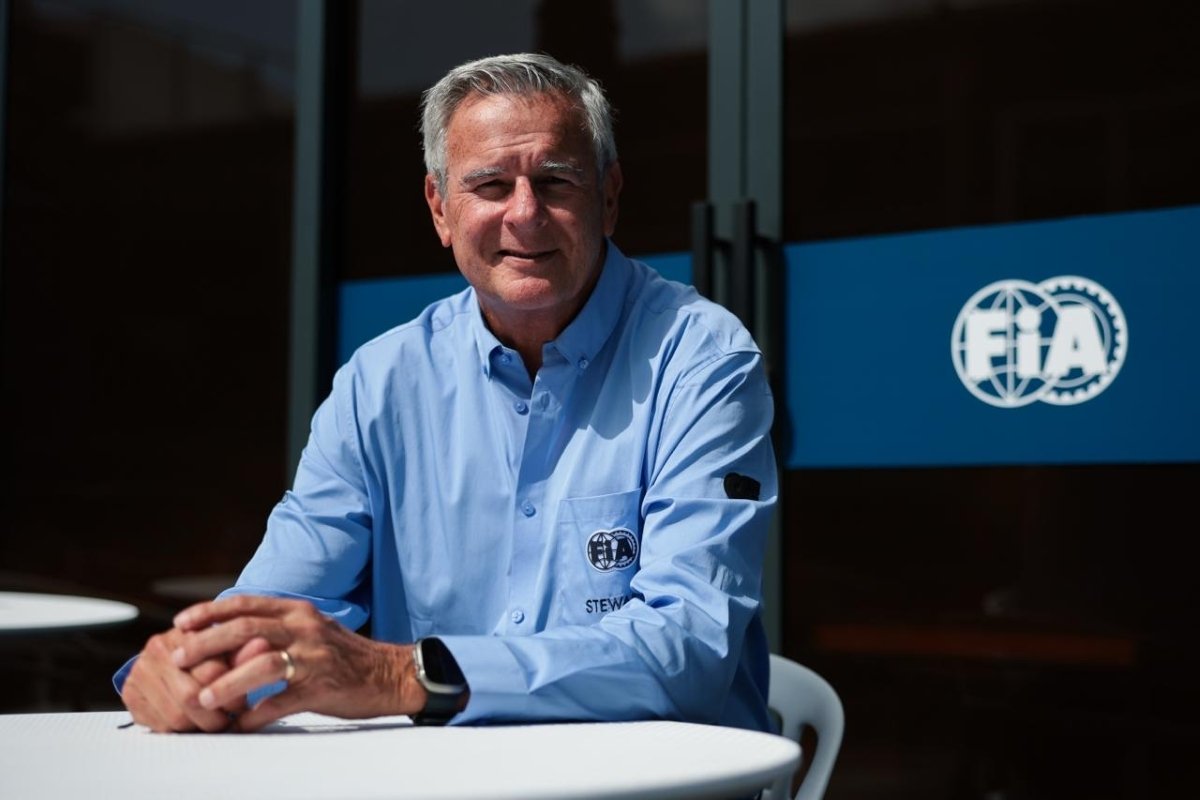
Photos: FIA
The role of the stewards in motor-racing is never easy. Causing a collision, gaining an advantage by leaving the track, ignoring yellow flags, driving too quickly, driving too slowly, impeding, technical infringements and the bugbear of modern racing, track limits. Even team personnel wearing shorts in the pit lane. It’s all in a weekend’s work.
But as Andrew Mallalieu, an FIA-appointed steward for Formula 2 and Formula 3 since 2017, explains, “stewarding is not about punishment. It is about fairness through the consistent application of the rules.”
In applying the regulations fairly and objectively, he is adamant that a steward’s “objective cannot be popularity – that would make a very bad steward. If, on the other hand, you develop a reputation for being accurate, listening properly and valuing the views of others, and you are respected in the paddock as a result, then chances are you are doing something useful for the sport.”
As can be seen from the non-exhaustive list above, the stewards adjudicate on a range of potential infringements of the technical and sporting regulations – the “rules” – and are supported by a huge amount of data: video, radio transmissions, telemetry and supplemented, where necessary, by the drivers’ viewpoint.
However, unlike football’s Video Assistant Referee (otherwise known as VAR, but not to be confused with the “real” VAR, junior series stalwarts Van Amersfoort Racing), they do not have the ability to freeze the action. Wherever possible, decisions need to be taken while the race is going on.
“Matters that are clear and beyond reasonable doubt should normally be decided in-session for two reasons,” he explains. “First, if a time penalty is imposed the driver may have the opportunity to serve it during the race and then fight on from his rightful position.
“Second, we all want the order in which the cars finish on track to be as close as possible to the final classification. Changing the order later through penalties is not how the fans, drivers or administrators want a race to end.
Nobody would argue with that but there is an inherent tension between the goals of speed and accuracy, as he acknowledges. “Speed can never come before accuracy, but once you have enough evidence to be confident in the decision, you owe it to the competitors to make that decision as quickly as you can.
“The key question is what information you have, and when. For an on-track collision, if we have strong telemetry and good video from several angles, including onboards, we can often make an in-race decision with a high degree of confidence. If important information is missing, or a driver’s evidence could materially help, we should defer the matter until after the session so we can gather what we need and give the parties a proper opportunity to be heard.”
Since the beginning of 2024 Mallalieu has attended most of the rounds of the FIA F2 championship, usually as Chairman of the Stewards, “but to explain how I got there I need to go back a bit further,” he begins.
Mallalieu grew up around motor-racing on the Caribbean island of Barbados, where his father was a founding member of the Barbados Rally Club. Mallalieu himself got his first taste of competition at the age of 16 when he navigated on the Barbados June Rally in 1980. While still competing in rallies, he quickly realised that his talent lay more in the administration than the stages and began to attend FIA meetings as the FIA Delegate of the Barbados Rally Club.
“By the late 2000s I had put myself forward for a seat on the FIA Rallies Commission. Through that work I was asked to serve as a Steward at regional events and then at WRC level. For the next several years I stewarded a number of WRC events around the world, but I soon realised that I wanted to dedicate more of my efforts to the Single Seater side, so I moved to the Single Seater Commission under Charlie Whiting and worked on championship regulations and the ‘driver ladder’ to F1.
“I guess I got noticed, because Charlie and Jean Todt asked me to join the F1 stewards as a trainee in 2010,” attending his first race at Montreal that year.
“After a few years as a trainee, I had my first official F1 appointment in Brazil in 2014, thanks to Charlie and Herbie Blash. Track walks with Charlie and Herbie were about the best training a steward could get in preparation for a weekend.,” he recalls.
“I also worked closely with Charlie at the early end-of-season steward meetings, which later became start-of-season training meetings. Together we worked on early versions of the Driving Standards Guidelines. Charlie always insisted they should never be written down and shared because the drivers would simply exploit them as rules! The irony, of course, is that today they are published and he was right!
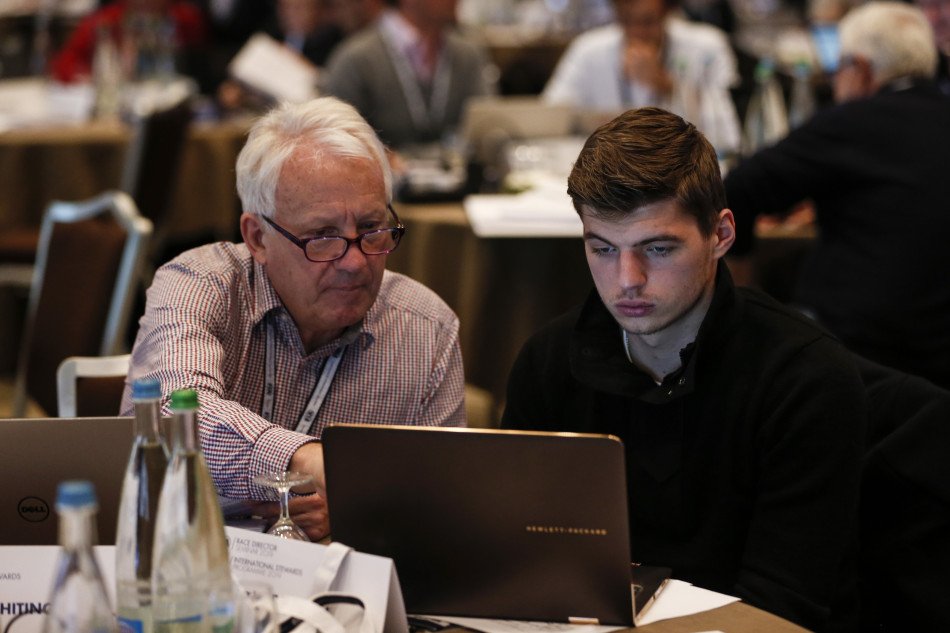
Charlie Whiting (here with Max Verstappen) was instrumental in getting Mallalieu involved in F1 and then F2
“To gain more experience, Charlie asked me to steward in GP2 and GP3. I started doing that in 2017, so I would do several support-series races and then a couple of F1 events each year. In 2019 I had my first appointment as Chairman in F2.
“By then I was also more involved in the Sporting Regulations, while [current F1 CEO] Stefano Domenicali was President of the Commission. We made significant strides as a team in those years: new cars, new races, a dedicated Race Director and more dedicated steward panels.”
Just as the FIA has established a pyramid that leads from karting to F1 for drivers, so the sport’s governing body is aiming for a set of regulations, and their policing, “where the underlying principles do not change, even though the procedures become more complex and the cars more sophisticated.”
“The main differences in the junior categories are, of course, the experience of the drivers and team members and the level of resources available to them,” he explains, citing two specific areas where the F2/F3 stewards can be tougher in their application of the rules than their F1 peers.
In cases of impeding another driver, “we do not generally accept ‘the team did not tell me someone was coming’ as an excuse. In F1 the Stewards may sometimes take greater account of a team failing to assist its driver properly. In that sense you could say we are tougher on junior drivers because part of the process is teaching them to take responsibility for what is happening around them.”
Another area of divergence comes with the imposition of penalty points on a driver’s licence, where again F2/F3 take a stricter line than F1, “where penalty points are generally reserved for the more dangerous, reckless or otherwise serious driving offences.
“In F2 and F3, when a driver is found to be at fault in an on-track incident, penalty points are normally part of the consequence. They create a season-long record of conduct, and drivers can also earn additional Super Licence points for completing a championship season without penalty points.”
As anybody who has waited for the final results to be published once all incidents have been reviewed will know, “one weekend stewarding at F3 or F2 may have more incidents to review and adjudicate than half a season in F1!
“You have to be able to drink from a firehose if you are going to Chair an F2 or F3 weekend!” he adds.
Another key difference to F1 is the absence of a Driver Steward, or rather the slightly different role played by F2’s Driver Advisor.
“In F1 the driver is one of the stewards, can vote on the decision and signs them as well. In the junior categories the Driver Advisor is often also asked to advise or mentor a driver on what he or she could have done differently, which is a slightly different role.”
In recent years, Pedro Lamy, former F1 driver as well as a race winner in F3 and F3000 (F2’s predecessor), has provided context and the driver’s viewpoint to aid the stewards in their decision-making. His contribution has been extremely valuable, say Mallalieu, “in keeping our steward panels aligned and consistent.
“He trains us in many respects – what a driver could see, what he could realistically do and how quickly he could react – and he is also especially good at calling BS when a driver’s explanation simply does not stack up!
“Sometimes a team has to explain to its driver why he was at fault, and that is not always easy. The Driver Advisor can do that from experience and from a place of real credibility. He has sat in the car, won and lost races, and has the experience as a driver.
“A steward understands the rules; a Driver Advisor understands what it feels like when those rules have to be applied at 250 km/h. You need both perspectives.”
One of the regular comments from drivers, commentators and fans alike is the wish for stewards “to be more consistent” in their decisions, matched by the equally frequent refrain of “why can’t they just use some common sense” when the letter of the rules seems to an outside observer to be contrary to some natural justice.
Mallalieu, of course, has heard it all before. But just as judges interpret the laws that politicians have enacted, so he is clear that the stewards are there to apply the rules as they stand.
“Fairness is not found in the kindness of a steward to one driver or another. It comes first from rules that are clear, workable and known in advance, and then from applying those rules consistently to everyone,” he argues.
However, he will admit that “sometimes the prescribed penalty can feel harsh.
“A few years ago, for example, we had a procedure intended to minimise stalls on the grid and drivers had to select a particular ECU map before the start. Because the procedure sat in the Technical Regulations, failure to follow it correctly was a technical breach and disqualification was the standard consequence.
“We knew there had been no technical or sporting advantage, and a lesser penalty might have felt more proportionate, but changing the consequence would effectively have meant changing the rule – something the stewards have no right to do. So, we applied the rule.”
To illustrate his point, he gives an analogy to football: “If we agreed to play football and decided beforehand that only goals scored in the left side of the net would count, those are the rules we would expect the referee to apply. If the referee later decided that any ball in the back of the net should count because it seemed fairer, that would not be our game anymore.”
Stewards, like drivers and journalists, are not infallible. But, he believes, any mistakes are “relatively rare”. And the system has “safeguards” to allow “Stewards, in defined circumstances, to re-examine a decision where significant and relevant new evidence emerges that was not available when the original decision was taken.”
Another pet grievance of social media but also occasionally competitors is that stewards are not “professional”, in the sense of being full-time paid employees who do nothing else but stewarding. “What we need are full-time stewards rather than ‘amateurs’,” goes the argument.
As one might expect, this is not a view he shares…
“I do not believe you have to be paid to be professional. Stewarding has a defined body of specialist knowledge, licensing and competency standards, continuous training and assessment, ethical obligations, conflict-of-interest requirements and accountability for performance. Those are the characteristics of a profession. Whether someone is paid for exercising it is a separate question.”
The development path of stewards is not unlike that of the drivers they adjudicate on – beginning in the junior categories at a national level and progressing up the ladder to international and more high-profile events.
To underline the point, Mallalieu highlights the amount of rigorous and continuous learning and assessment that stewards undergo, which can be divided into three layers: planning and preparation for the season ahead, formal training, and continuous review and assessment.
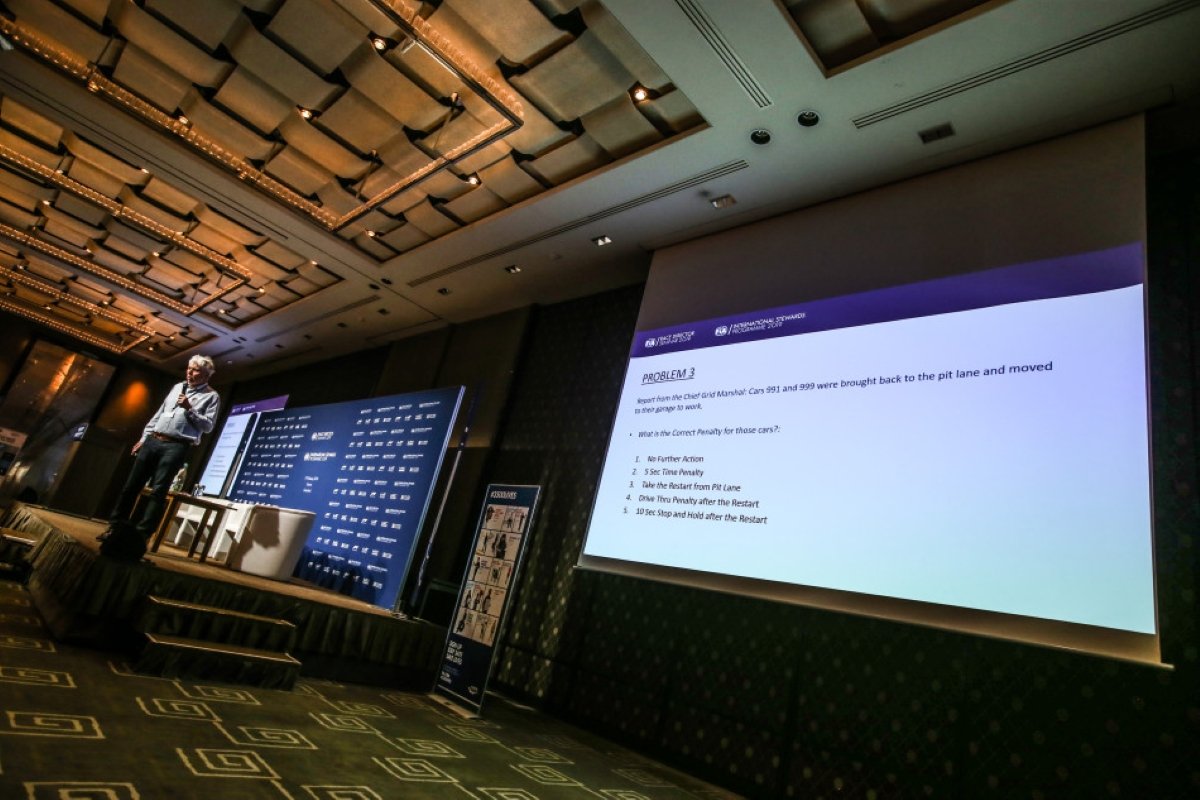
Training and continuous development is vital for stewards
Ahead of each season the stewards meet “go through the rules in detail and develop the Penalty Guidelines for the coming year, looking closely at regulatory changes and at anything we learned during the previous season.” In recent years, the focus in deciding who is at fault for an on-track incident in F1 frequently refer to the Driving Standards Guidelines.
Though designed principally for F1, the guidelines “are used as a common frame of reference in the junior categories. By their nature they are guidelines rather than rules, but they help us analyse dynamic racing incidents using a consistent approach.”
Once the season gets underway, the stewards “meet both in person and virtually, with senior stewards leading sessions on regulations, procedures, ICA (International Court of Appeal) decisions and case studies. These sessions include assessment and feedback, so it is not simply attendance; we are expected to demonstrate that we understand and can apply what we have learned,” he explains.
The F2 and F3 stewards meet regularly during the season to look back at what has happened and “go through decisions and the challenges we have faced.” As Chairman, Mallalieu will prepare a report on each event, “highlighting significant decisions, operational issues and areas where the regulations could perhaps be improved. We critique each other in something close to a 360-degree review and try to maintain a culture in which everyone is comfortable saying, ‘We could have done that better.’”
Three stewards serve at each F2 event, with one appointed as the Chairman, the role exercised by Mallalieu this season at all F2 races except Montreal, Monaco, Barcelona and Monza.
The team begins its weekend with a 9am track walk on Thursday morning “with the F2/F3 Race Director, track map in hand. We discuss known flash points from previous years, any circuit changes and generally re-orient ourselves to what the drivers will see.
“In the early afternoon all the F2 and F3 Stewards and the Driver Advisor sit together to review video from previous races, especially the previous year’s event at that circuit. We also look at any recent unusual decisions so that we are aligned going into the weekend. We also get driven on a semi-hot lap with the driver advisor who points out ideal lines and points of interest where visibility may be less than ideal or perhaps good passing opportunities.
“Thursday at 5pm is the drivers’ briefing. The Race Director normally reviews the previous event first, giving drivers a chance to raise anything left over from it, and then goes through the special procedures for the weekend. It is important for the Stewards to attend because instructions given by the Race Director can have regulatory effect and we need to know exactly what the drivers have been told.
“Friday is usually the busiest day, with practice and qualifying. Post-session technical checks can run quite late and, because the junior categories start earlier than F1, we can also finish much later. A 12-hour Friday is a short one; 18-hour days are not unusual.
“Then it is game face on for Saturday’s Sprint Race, starting with publication of the final grid an hour before the formation lap. Depending on the on-track behaviour there may be hearings after the race, but generally the technical report is the last thing we wait for before leaving.
“From the start of the race to publication of the final classification is normally three to four hours. Sunday starts early because we have to be finished before F1 is on track. We are normally packing up by the time the F1 cars start their reconnaissance laps. The days are long, but the team always finds ways to enjoy them,” he says.
“Each Chairman has his or her own style, although in the end we are probably not that different. I see my role a bit like the conductor of an orchestra: get the best out of each instrument and help the group produce a smooth symphony.
Although the Chairman has a casting vote if the panel is split, for Mallalieu that is “a last resort rather than the starting point. My objective is always to reach consensus.”
Equally when a driver, accompanied by the team manager, is summoned to ‘the headmaster’s office’, they get a chance to explain their side of the story. “I always make sure the driver has a proper opportunity to explain his or her position, and I repeat it back so it is clear that I understood what I was told. In the heat of the moment drivers can sometimes be agitated. That is understandable – provided there is respect.
“Once we have heard the parties we deliberate privately as a panel and reach our conclusion. It then becomes my job as Chairman to explain the decision. You can have one driver happy and the other unhappy; both drivers happy; and certainly both drivers equally unhappy.
The flipside of Liberty’s success in increasing the global audience for junior categories like F2 and F3 is that now thousands of fans study every detail, every move, every penalty and, of course, most of them have an opinion on what should or shouldn’t have happened and, thanks to social media, a platform to share their assessment of supposedly “obvious mistakes.”
Whilst Mallalieu admits that he does read “some of the comments directed at Stewards online, I always look for the ones that come from a constructive place. We are not the font of all wisdom, and feedback can be very useful when it is genuine.
“In the Caribbean we have a saying: ‘Man don’t throw rocks at a mango tree unless it has mangoes.’ I like that because it reminds you that attention usually comes when there is something people care about. We are certainly getting more attention, and I welcome constructive feedback on how we can do better.”
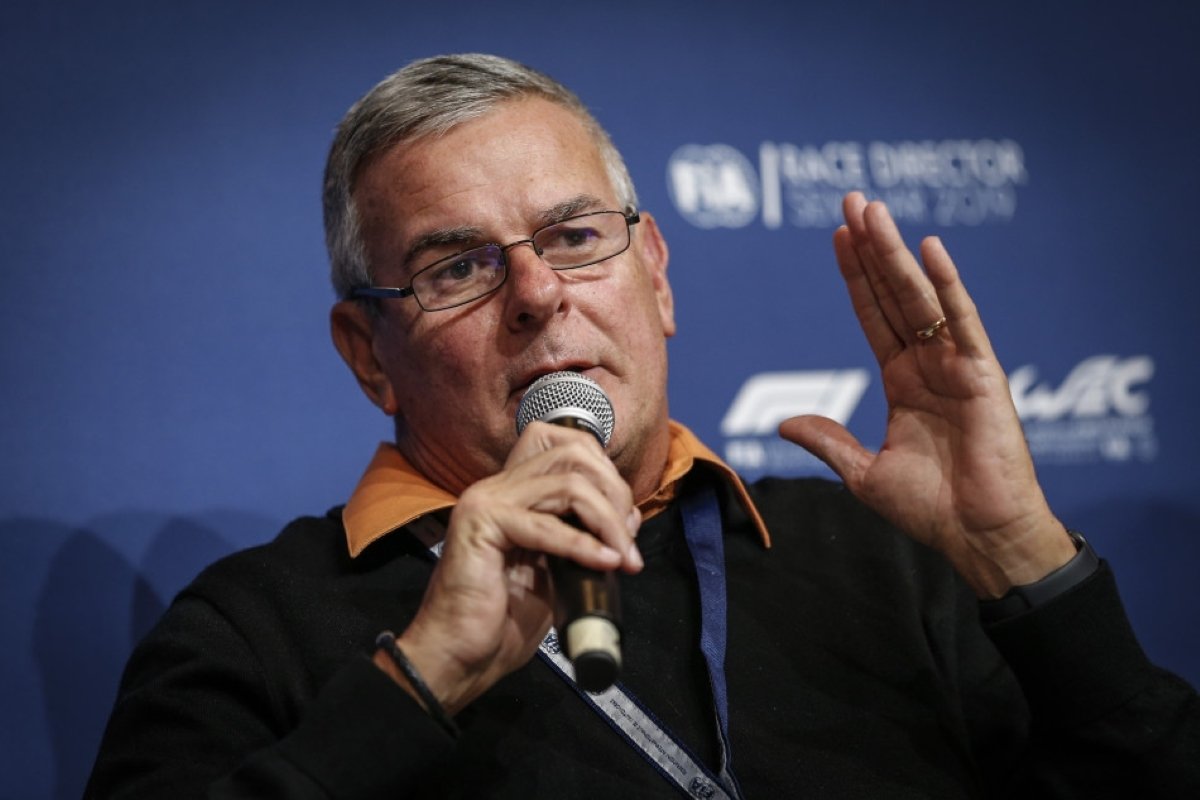
Mallalieu speaking at the FIA International Stewards Programme 2019
As of the Baku F2 weekend, Mallalieu calculates that he has “completed 119 races as an International Steward in Single Seaters, 69 of them as Chairman. By the way, that also amounts to 75 weekends away from home over the period.”
He is also in no particular order a husband, father, Senator in the Barbadian parliament, President of the Barbados Motoring Federation and a successful businessman. He has also helped to revive the Bushy Park racetrack at home. And now that he has put a stop to his rallying, he confesses to having “a bit of idle time on my hands – so I am playing a little more golf.”
He has, he says, “the best wife a man could ask for over the last 33 1/2 years, an excellent team who run the businesses and [The Barbados] Federation day to day, children and family who share my passion for the sport, and of course the modern tools that make virtual meetings possible.
“I feel like one of the luckiest people in the world. I love what I do with the FIA and I work with people throughout the organisation who share that passion for motor sport. Stewarding has given me opportunities, friendships and experiences I could never have imagined when I was a 16-year-old navigator in Barbados. It is genuinely an honour to serve the sport I love.”