Photo: ACI Sport
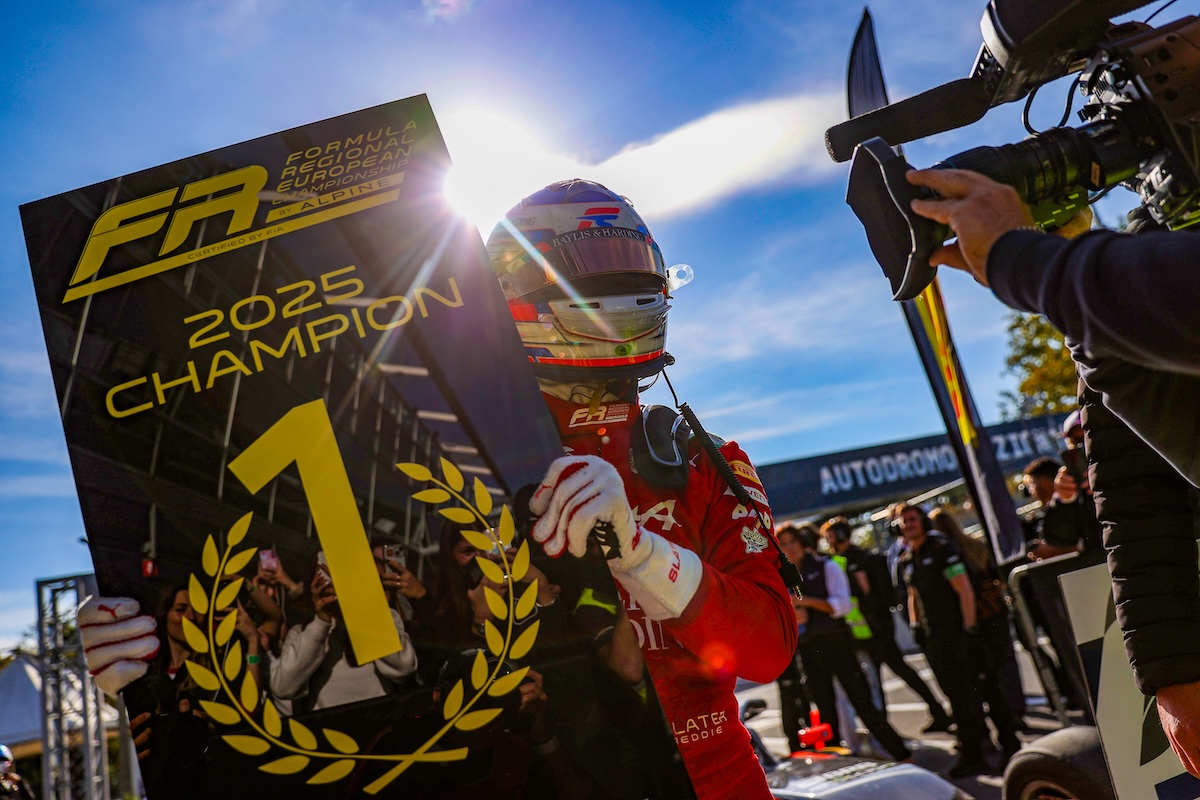
While the final margin was large, Freddie Slater was made to work hard to become FREC champion in 2025
Freddie Slater was many people’s favourite for the title heading into the 2025 Formula Regional European Championship. The Briton had a record-breaking run to the 2024 Italian Formula 4 title with Prema, and remained with the team for the step up to FRegional, hoping to emulate its previous champions Dino Beganovic, Andrea Kimi Antonelli and Rafael Camara.
Over a 10-round campaign, the last for the first-generation Tatuus T-318 chassis after seven seasons of use, fortunes ebbed and flowed as five drivers from five different teams set the pace. Trident’s Matteo De Palo matched Slater from round one at Misano onwards, but then a dominant double win for Slater in the Monza season finale crowned him with a big points gap.
Slater and Prema possibly made the task than it should have been. The team seemed to lack its pace advantage from past seasons, and between them the drivers in Prema’s three other cars amassed a points tally that was under 44% of Slater’s own.
“[Winning the title feels] pretty crazy, especially with the year we’ve had. It’s not been smooth sailing – we’ve had many wins but also a lot of downs – and it’s been super close,” was Slater’s assessment of the outcome of his campaign.
After being crowned at Monza, he admitted “we’ve made a lot of mistakes, some in our control, some out of our control”.
Slater thanked his mechanics “for fixing all my mistakes and crashes” but is arguably unduly harsh on himself, such are his high standards. His most significant mistake came on the opening lap of the season-opening race, when he squandered his pole advantage through wheelspin, then was trying to go alongside De Palo through turn one when he was spun out after a hit from behind.
De Palo went on to win, forging a 25-point lead Slater took five races to negate. In round six at Imola, a mistake outside of his control cost Slater 18 points when he was disqualified from second due to missing valve caps on his left-hand wheels.
His only podium-free weekend was at the Red Bull Ring. Technical issues meant he qualified 18th for race one, and finished it in 12th, then he was fourth in race two, when he said “the step we had to take was huge and there is not much chance for overtaking”.

Slater at Misano
Slater was the only driver to win both races in a weekend, doing so at both Paul Ricard and Monza. His seventh victory In the season’s penultimate race secured him the title and showed maturity, speed, intelligence and a winner’s mentality.
While he clearly had enough speed to pressure Evan Giltaire for the lead, Slater bided his time as the Frenchman’s tyres slowly gave up the fight. With De Palo down the order after a grid penalty and first-lap wing damage, Slater knew “I just had to wrap it up today” as he told Formula Scout with a smile that evening, but ultimately couldn’t resist the opportunity to do so with a victory.
Arguably his best drive of the year had come a few weeks earlier at Hockenheim, as he charged from fourth to first on a damp track, passing Giltaire, Akshay Bohra (twice) and De Palo before disappearing into the distance.
Slater managed to retain an air of chilled insouciance despite the pressures of the tight run-in against De Palo, and rarely looked flustered, in or out of the cockpit.
His eight wins matched the tally of Gregoire Saucy in 2021 (the first season following the merger with Formula Renault Eurocup), but five fewer than the 13 that Frederik Vesti managed in the 2019 season, which had three more races. Slater’s overall points haul of 313 beat the 20-race record of last year’s champion, Camara, by four.
Slater will unsurprisingly follow Camara’s path to Trident in FIA Formula 3 for 2026, with his camp confiding that “the deal had been done quite early”. Only a brave gambler would bet against him enjoying a similar season to his predecessor.
At the start of the season, the main opposition to Slater had been expected to come from sophomores Giltaire at ART Grand Prix and Pedro Clerot at Van Amersfoort Racing.
Giltaire had started his year by defeating Slater to win the Formula Regional Middle East championship and thus headed back to Europe in an optimistic mood as the highest-placed returning driver. Clerot had finished the previous season just four points adrift of Giltaire. Both had stayed with their 2024 teams, looking to build on solid rookie seasons.

De Palo
However, De Palo struck early by winning the opening race at Misano and would provide the most constant challenge throughout the season.
His victory on the Adriatic coast was not only his maiden win at this level, and his first in cars since Spanish F4 in 2023, but also the first win for his Trident team in its fourth season in the series. “We felt a lot of emotion,” recalled De Palo, and the outpouring of elation on the pit wall as he crossed the line was certainly uplifting.
Clearly, De Palo gelled perfectly with the team; the switch to an Italian team from Sainteloc Racing seemingly providing him with confidence and reassurance.
Trident team manager Luca Zerbini was not surprised by De Palo’s performance:
“From the very first moment we started to work with him, from testing at the end of last season, on the simulator, at all the technical meetings, we saw that is very good, to be honest,” he said. “In winter testing he was performing very, very well. He felt very good with the team straightaway and vice versa.
“He’s smart, and always happy, I would say. We laugh a lot, because sometimes he says funny things also on the radio. But he feels the pressure, like every driver, of course.
“At the end of the day, when you work hard, and you have a good driver in the car, results will come. So, maybe it was a surprise for a lot of people. To be honest, we couldn’t foresee how good the season would be, but we knew that it was going to be a very good season with him.”
Zerbini believes that this year’s results prove the strength of his team’s set-up and staff continuity.
“Last year could have been much better. [Roman] Bilinski had that road accident and was out for a few races. Even when he came back, he was still not at his best, but we were still performing with [Michael] Belov.

De Palo at the Red Bull Ring
“I’m proud of that because the team is very stable, also from the technical point of view. We have three engineers working together since day one in FRegional and even though they are quite different, they are able to work very well together,” he explains.
On De Palo’s day, he was untouchable. His three subsequent wins at the Hungaroring, Red Bull Ring and Barcelona were dominant. He showed that was prepared to fight his rivals wheel-to-wheel as he demonstrated in the opening corners at Misano and Barcelona.
He was a model of consistency, only failing to score points twice – the second race in Austria and the Monza opener – both due to contact damage. Unlike Slater, De Palo was never able to dominate a weekend, his best overall weekend results being a win and a third.
He was unsurprisingly a “bit sad” at losing out in the final weekend and said he “needed to step back a little.”
When he does reflect on his year, one that secured him a place on McLaren’s driver development programme, he can be rightfully proud, even though the way in which he ultimately lost out was a sad and arguably undeserved conclusion. Next year, he will need to take Slater on again, but this time from across the same garage.
Two drivers tied for third place, Clerot and R-ace GP’s Enzo Deligny, with the French-Chinese driver taking the position by virtue of his four victories.
Deligny was a driver with something to prove as he also returned for a second season, having been dropped by the Red Bull junior programme over the winter.
His speed was never in doubt. Indeed, he was arguably the outright fastest driver in FREC this season, even having a slight edge on Slater: measured by the average gap to the best qualifying time in each qualifying group, Deligny was marginally the fastest qualifier of the year, despite struggling in the colder morning temperatures at Monza.

Deligny
Significantly, each of the top qualifiers had at least one disastrous qualifying session, whereas in 2024 Camara managed to post a time among the top four in his group at every race.
As the average times clearly show, the gap at the front was minuscule; evidence of the tightness of this year’s championship.
Qualifying performance
| Pace compared to fastest time | Highest position | Lowest position | Mean position | Median position | |
| Enzo Deligny | 100.242% | 1 | 9 | 2.63 | 2 |
| Freddie Slater | 100.264% | 1 | 9 | 2.47 | 2 |
| Pedro Clerot | 100.265% | 1 | 14 | 3.16 | 2 |
| Evan Giltaire | 100.311% | 1 | 13 | 3.58 | 3 |
| Matteo De Palo | 100.328% | 1 | 8 | 2.53 | 2 |
| Akshay Bohra | 100.429% | 1 | 9 | 3.74 | 3 |
| Hiyu Yamakoshi | 100.583% | 1 | 12 | 5.58 | 5 |
| Rashid Al Dhaheri | 100.586% | 1 | 8 | 4.21 | 4 |
| Taito Kato | 100.617% | 2 | 10 | 5.42 | 6 |
| Nikita Bedrin | 100.807% | 2 | 12 | 6.22 | 6 |
| *Only includes drivers competing in at least 5 events, based on pace and positions within qualifying groups | |||||
What Deligny lacked was consistency, although he had clearly made huge strides in maturity since his disappointing rookie season.
He was off-the-pace at the opening and closing rounds, where his team-mates Bohra and Jin Nakamura mostly struggled too, while a spin at his home event at Paul Ricard in the summer cost him dearly.
On his day, Deligny was blisteringly quick, as his wins at Spa-Francorchamps, Imola, Barcelona and Hockenheim proved. He and Slater put on some of the seasons’ best battles, notably at Spa and the Hungaroring.
The weekend in Budapest showed both sides of his character, driving a beautiful race to lead and then re-pass Slater when a technical issue arose. A third-placed finish was then lost when he was disqualified for driving in a “dangerous” and “erratic” manner on the slow-down lap.
“This year wasn’t easy,” Deligny commented. “I think the competition has been the toughest it’s ever been. We took four wins, nine podiums and four pole positions and still we barely made it into the top three.”
After what he acknowledged had been a “tricky year” in 2024, he felt that he and R-ace GP had made “a big step”, saying: “we worked really hard during the winter on the set-up and tyre management, and our speed was really good.”
His team principal Thibaut de Merindol agrees that “Enzo has improved a lot compared to last year”.
“He always has been potentially very quick. From the first test we did with him during the summer of 2023, he was able to drive the car very fast but it was very all over the place in many aspects. Where he has improved a lot is, I think, that he’s much more mature as a human being. He’s much more integrated in the team in terms of communication, in terms of feeling comfortable with everyone around.

Deligny
“He opened up a lot. We can joke, we can have fun. Last year he was like a very young teenager; very shy, very defensive. So, he made a huge step. Then the work with the team is much more efficient and I think he’s feeling much more comfortable, and then the performance on track comes.
“Overall, looking at the statistics, I think he’s the best performer in qualifying. We made some mistakes, we lost some points, talking about Hungaroring, but he’s on his way to getting better and better, and he did a mega step.
“When he lost Red Bull, I think it forced him to analyse the situation and understand that he had to change something. I’m very happy.”
And with good reason, as R-ace GP managed to wrestle the teams’ championship back from Prema for the first time since 2021, largely thanks to Deligny’s points. He will move on to Prema for his rookie F3 season in 2026.
Van Amersfoort Racing, like Trident, scored its maiden FRegional win with Pedro Clerot in 2025, just as the popular Dutch team celebrated its 50th year in motor racing. To add icing to the birthday cake, the first win came at Zandvoort, just 80 kilometres west of the team’s base at Zeewolde, with a host of former drivers and guests braving the rain to join in the festivities.
Clerot took both poles in the Netherlands but got mugged into Tarzan in race one by a fast-starting Slater. However, he made amends in race two, with team-mate Hiyu Yamakoshi following him home to make it an even more special weekend for the local team.
The team struggled at the start of the year with Clerot failing to score in either race at Spa, his only non-points finishes all year. As he told Formula Scout at the end of the year: “the year has been 90% strong. After Spa, we’ve been fighting for poles everywhere and I’m happy with the progress we’ve made.
“Spa and Misano were not so good – Misano is a very specific track – but in Zandvoort and Barcelona we had the pace.”

Clerot leads home Yamakoshi at Zandvoort
Though he ultimately just missed out on third in the standings, Clerot “looks back very positively on the season and two years of working well with the team, and not disappointment about the championship.” He swaps VAR for Rodin Motorsport for the move up to F3 in 2026.
The last of the five stand-out drivers, Giltaire somehow remained philosophical and in good humour despite a season that started strongly with a win and a second at Misano before plunging into a deep hole. He and his ART team kept battling and managed to dig their way out of the trough to bounce back with a very strong performance at the last two rounds at Hockenheim and Monza.
The car was clearly not a match for the machines of Prema, at least in Slater’s hands, or R-ace GP, and his defence of the lead at Monza on tyres that were losing grip rapidly was heroic.
Formula Scout has documented his struggles during 2025 previously, and it seems at the time of writing that a berth in Super Formula Lights in Japan beckons. But have no doubts – Giltaire, like the four who finished above him, would enrich any Formula 3 grid. Europe’s loss, though maybe only temporary, is Japan’s gain.
So, what of the rest?
Bohra was the only other driver to win a race, the Indian-American taking a perfect pole position, fastest lap and win at Imola. De Merindol sees a similarly positive development in him as with Deligny: “For a rookie, I think he’s done a very good season. Okay, obviously, Freddie Slater is a rookie as well, but we know the amount of preparation, the experience and the background of Freddie, which Akshay doesn’t have at all.”
Like his team-mates Bohra was off the pace at Misano and Monza, but was able to lead the team’s attack in races such as Paul Ricard where Deligny faltered.
Formula Regional Europe welcomed four Japanese drivers in 2025, helped by both Honda and Toyota placing junior drivers in the series. Hiyu Yamakoshi stayed with VAR where he had shone in F4, SF Lights race winner Jin Nakamura joined R-ace GP, while French F4 champion and Taito Kato lined up at ART Grand Prix, alongside sophomore Kanato Le.
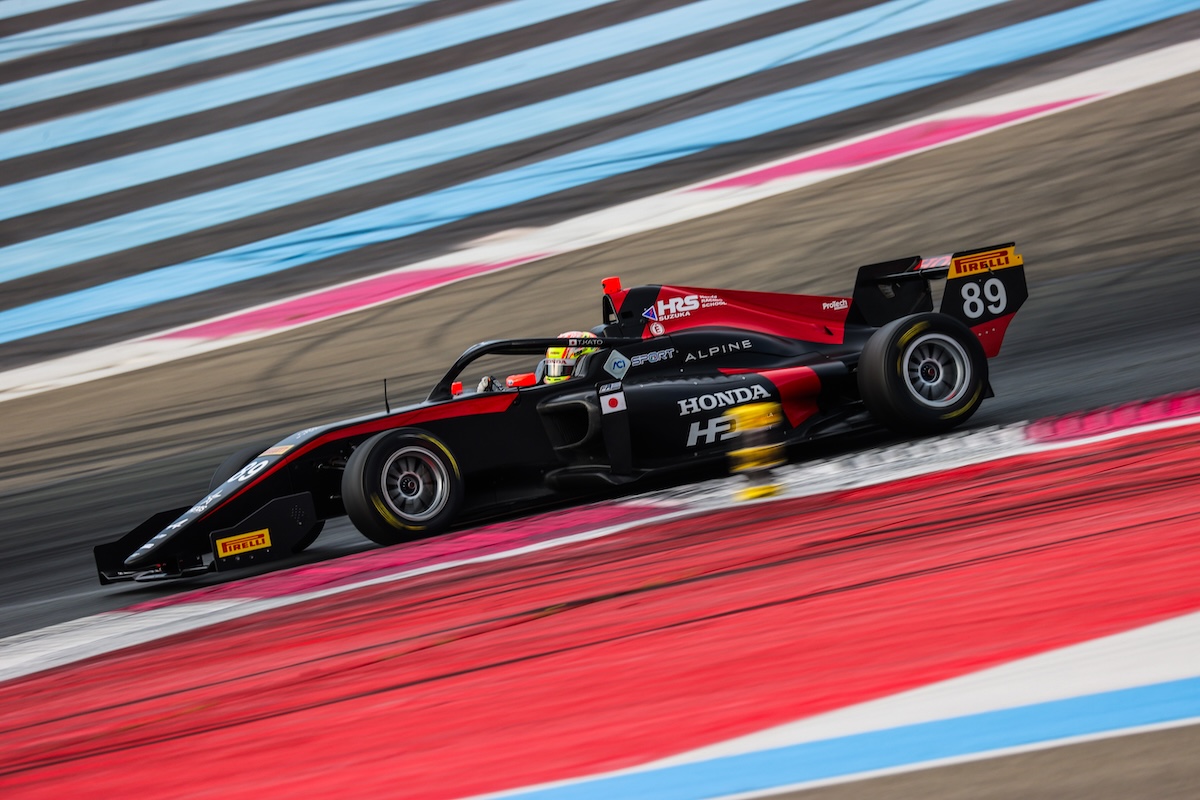
Kato
Yamakoshi admitted to feeling extra pressure to beat his compatriots: “they are nice friends, so I don’t want to break our friendship, but racing is racing, so I want to beat them on the track, of course.”
Honda protege Kato was undoubtedly the most impressive, often pushing more experienced team-mate Giltaire hard. From mid-season he was a regular points scorer, aided by the presence in the paddock of Honda guru Takuma Sato, finishing the year with two fourths at Monza.
Yamakoshi had surprised many in Italian F4 in 2024 but could not match those results upon stepping up to FREC. A poor weekend at Misano dented his confidence, although a front row start and podium in the following race at Spa got his season underway. He followed it up with another second place at Zandvoort, and excelled in the wet part of qualifying, but his year rather tailed off thereafter with just one points finish after the summer break.
Toyota junior Nakamura took time to adapt but his season was the reverse of Yamakoshi’s, picking up momentum from Paul Ricard, apart from a terrible weekend at Imola. However, his season lacked consistency with too many mistakes blemishing his record.
He initially found the step down from SF Lights quite “difficult, because of the lack of grip” but the move had been driven by a push to learn “the tracks, the teams, everything” about racing in Europe. The presence at race weekends of Kazuki Nakajima and Kamui Kobayashi from Toyota provided extra support and motivation, making him, he said, “the happiest man in the paddock.”
The attraction for the Japanese contingent overall, he believes, was the “competitiveness of this championship; every team has good performance.”
All four Japanese drivers will move up to FIA F3, with Nakamura the only one to trade teams, moving to Hitech TGR as his backer looks to move him onto the next step towards F1.
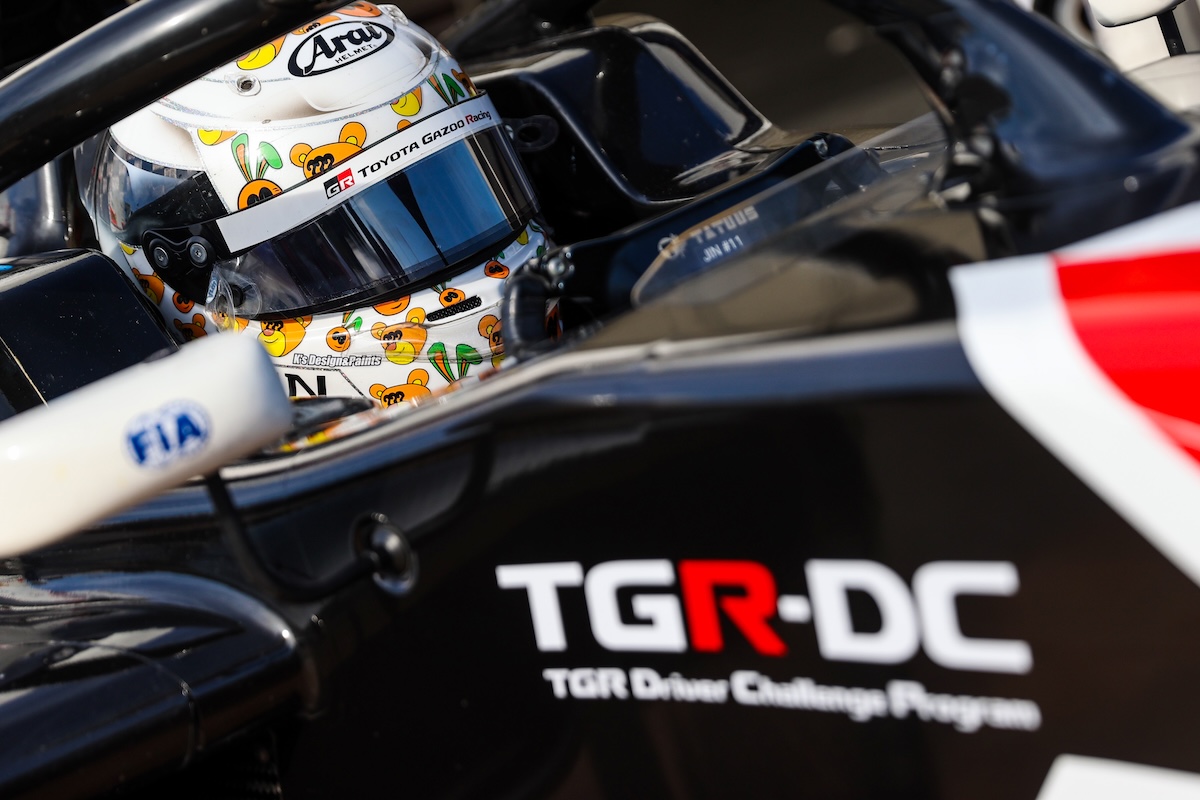
Nakamura
Rashid Al Dhaheri looked promising on occasions at Prema, as the step up to a more powerful car seemed to suit his style after F4. If he remains in FREC, the Mercedes-AMG F1 junior could show his potential. He followed Slater home to take second-place finishes at the Hungaroring and Paul Ricard, where he also topped his qualifying group, in a mid-season run of strong results.
For team-mate Jack Beeton the year was a nightmare from beginning to end. Runner-up to Slater in Italian F4, he now struggled to even score points. His Monza weekend summed up his year: crashing at the first corner in race one, incurring two separate grid penalties for misdemeanours in qualifying for race two and then leaving for IndyNxt testing before the second race.
Prema fielded Doriane Pin in a fourth entry from the second round at Spa, with her F1 Academy commitments taking priority. However, amid the constant swapping from F4 to FRegional machinery she struggled to make an impression and ended her campaign after Paul Ricard to focus on her ultimately title-winning F1 Academy season.
The fourth Prema car was run as a wildcard entry for Pin’s then fellow Mercedes juniors Alex Powell and Yuanpu Cui in three late-season rounds. Neither could get a handle on the car in the limited running available.
Prema has been the gold standard in FRegional since its beginning, with the exception of the very start of the Alpine era, so its apparent struggles were surprising. Was Slater’s talent such that he could compensate for any inherent deficiencies in the set-up or were the other drivers unable to extract the maximum from a front-running car?
Having said that, Prema still got close to the teams’ title in a year when no team apart from R-ace GP took wins with two different drivers.
VAR’s Dion Gowda picked up the official rookie title but with most first-year drivers ineligible having driven in the Middle East series, he had close to no competition. Of the other “eligible” rookies only Edouard Borgna did a full season, although offered little challenge.
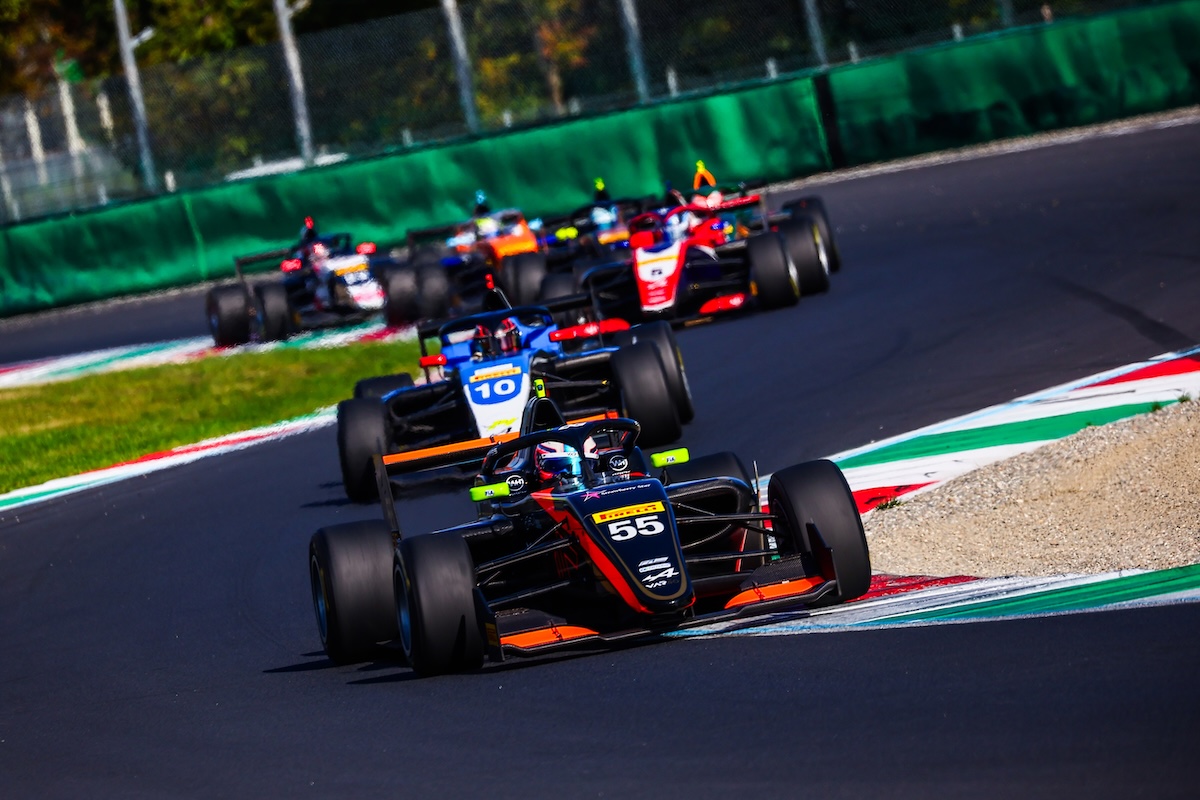
Gowda leads Bedrin
Nikita Bedrin put in some strong performances at Sainteloc Racing, notably at the Red Bull Ring, but the team lacked any experienced back-up for most of the year.
For RPM and G4 Racing the sooner the year could end, the better. At least both gained entries for the 2026 championship, not without some drama in G4’s case.
Both seemed to operate revolving doors for their driver line-ups. G4 went through six drivers while the Italo-Irish squad managed to get through 10 drivers in the two remaining cars alongside ever-present Giovanni Maschio.
In truth, Keith Donegan’s team was using the latter part of the season as an extended driver test for 2026 and, Jan Przyrowski, Ean Eyckmans, Reno Francot, Tomass Stolcermanis and James Egozi all showed promise on their limited appearances.
Both outfits have the potential to run at the front and win races, and the series would be poorer without them.
Of the two new teams, Akcel GP only appeared on the eve of the season start and disappeared again after Imola, while CL Motorsport went for experience in their driver line up, and series veteran Belov duly delivered once he had joined the Italian-based team from Spa.
FRegional Europe goes into a new era in 2026 – new Tatuus chassis, a new Toyota-based engine from Autotecnica, and increased direct FIA involvement in technical and marketing matters. In addition, it will introduce some reversed-grid races as part of an overhaul of the calendar.
The final round at Monza also marked the 100th race of the championship’s partnership with Alpine, having adopted the Alpine-badged, Oreca-developed engine from 2021 following its merger with the Formula Renault Eurocup.
The end of the partnership with Alpine marks the end of Renault’s involvement in the junior single-seater ladder. The history of Formula Renault dates back to 1971 and counts the likes of Lewis Hamilton, Charles Leclerc and Oscar Piastri among its graduates. FRegional Europe had continued the link through the “by Alpine” suffix to its official championship name.
Nevertheless, the championship can go into its next phase full of optimism if the quality of this year’s drivers is a guide.