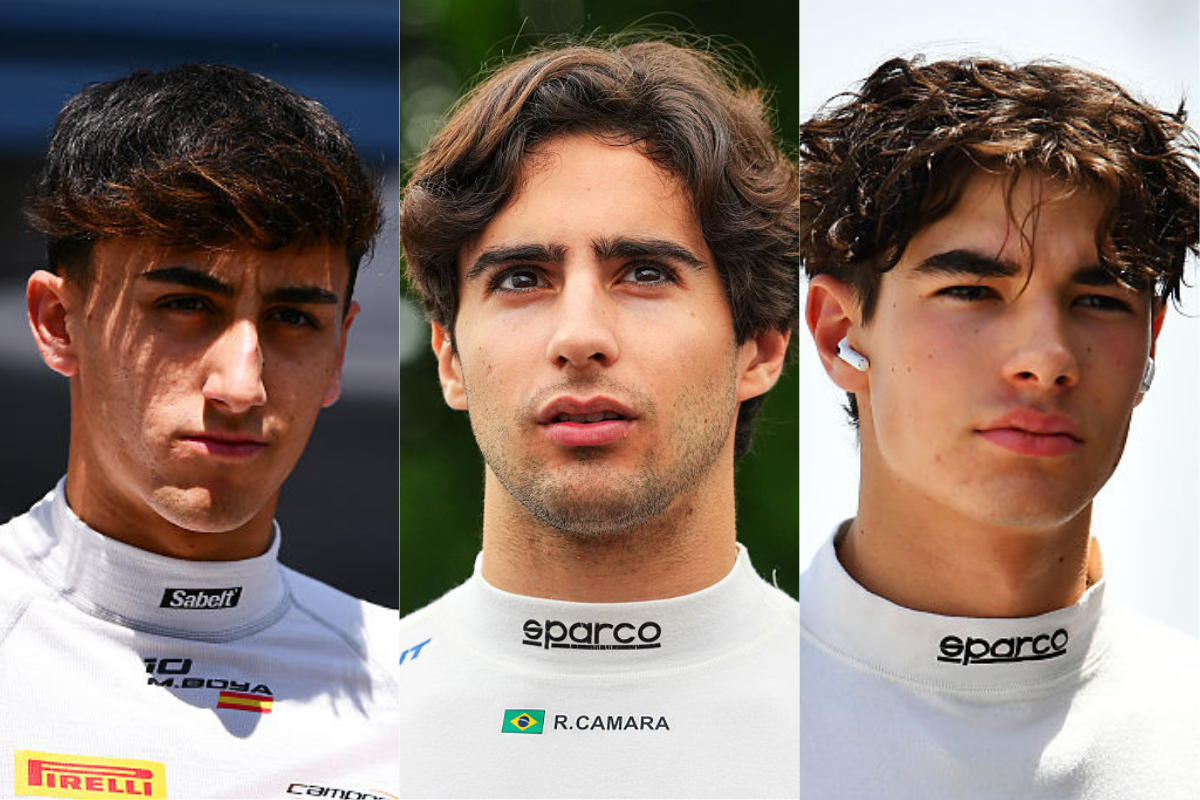
Photos: Formula Motorsport Ltd
Drivers in F3 often rue weekends not coming together, but this year the results very much reflected the pace
There were no doubts that Trident’s Rafael Camara was the driver to beat in the 2025 FIA Formula 3 Championship, and he claimed five poles out of 10. But he was also one of the eight drivers to line up in 30th and last place for a feature race.
Only two drivers scored half as many points as Camara racked up in feature races, but in sprint races he was outscored by 14 of his rivals. He had a 26-point lead after four races, but only nine races later did he grow that advantage to 27 points. His lead grew by another point in the following round, then he added 20 to it at the Hungaroring and wrapped up the title a round early.
So was it a dominant year? Or did the first two rounds outside of Europe make the difference before the more familiar tracks for the field made it a more competitive contest?
Let’s start with the detail with the biggest impact on drivers and teams’ competitivity this year: the new Dallara F3 2025 car.
Pre-season testing took place at Barcelona, and in winter coats. The consensus was the cool conditions made the test useful for teams but no so much for drivers, particularly with wet weather during some running, and there was huge variance in paddock responses regarding how similar or different the car was to its lighter predecessor.
Some drivers stepped up from series with tyres with very different characteristics to the Pirellis used in F3, so managing degradation was a crucial new skill they needed to learn that Barcelona in February didn’t offer.
The track time was still incredibly useful for teams, who now had data to correlate their simulator models to the real car. Trident’s Noah Stromsted said after two rounds his team’s model was “very accurate” and why “we always start in quite a high level” on race weekends. Camara topped practice and qualifying at each of the first three rounds.
Single-lap pace
| Pos | Driver | Team | Pace | Pos | Driver | Team | Pace |
|---|---|---|---|---|---|---|---|
| 1 | Rafael Camara | Trident | 100.214% | 20 | Santiago Ramos | VAR | 100.846% |
| 2 | Nikola Tsolov | Campos | 100.286% | 21 | Brando Badoer | Prema | 100.874% |
| 3 | Mari Boya | Campos | 100.475% | 22 | Louis Sharp | Rodin | 100.932% |
| 4 | Brad Benavides | AIX | 100.509% | 23 | Joshua Dufek | Hitech | 100.965% |
| 5 | Noah Stromsted | Trident | 100.537% | 24 | James Wharton | ART GP | 101.038% |
| 6 | Martinius Stenshorne | Hitech | 100.564% | 25 | Christian Ho | DAMS | 101.044% |
| 7 | Tim Tramnitz | MP | 100.569% | 26 | Ivan Domingues | VAR | 101.047% |
| 8 | Freddie Slater | AIX/Hitech | 100.591% | 27 | Jose Garfias | AIX | 101.076% |
| 9 | Alessandro Giusti | MP | 100.610% | 28 | Matias Zagazeta | DAMS | 101.141% |
| 10 | Ugo Ugochukwu | Prema | 100.624% | 29 | Nikita Bedrin | AIX | 101.181% |
| 11 | Roman Bilinski | Rodin | 100.638% | 30 | Jesse Carrasquedo Jr | Hitech | 101.189% |
| 12 | Callum Voisin | Rodin | 100.648% | 31 | Fernando Barrichello | AIX | 101.222% |
| 13 | Noel Leon | Prema | 100.649% | 32 | Gerrard Xie | Hitech | 101.291% |
| 14 | Charlie Wurz | Trident | 100.674% | 33 | Niko Lacorte | DAMS | 101.348% |
| 15 | Theophile Nael | VAR | 100.679% | 34 | James Hedley | AIX/VAR | 101.385% |
| 16 | Tuukka Taponen | ART GP | 100.737% | 35 | Nikita Johnson | DAMS/Hitech | 101.437% |
| 17 | Bruno del Pino | MP | 100.737% | 36 | Javier Sagrera | AIX | 101.575% |
| 18 | Tasanapol Inthraphuvasak | Campos | 100.778% | 37 | Nicola Marinangeli | AIX | 102.141% |
| 19 | Laurens van Hoepen | ART GP | 100.818% | 38 |
Driver did less than three rounds. No average when only one event attended
Super simulator usage enabling Trident’s drivers to start 2025 with more confidence and pace was grounded further when Van Amersfoort Racing’s Santiago Ramos said his pre-season preparations had been tougher than expected as he had been used to Trident’s simulator from racing for them in 2024.
“With the new car, where there was a big question mark for everyone on where are you going to start,” reflected Camara, one of the field’s rookies. “Let’s say that we got the right information [from testing] then we knew already the direction to go.”
During the season opener in Melbourne, a very different track to Barcelona, Ramos told Formula Scout that the difference in approach and feeling to the Dallara F3 2019 wasn’t when driving at pace — or managing it — but rather with “warm-up procedures”. Given how much track temperature influences that, it meant lots of learning waited for the first two rounds.
Drivers without the understanding of where those procedures had to be approached differently started the season with big question marks as to why qualifying push laps they felt happy with in the moment put them down the order, and they all made the breakthrough at different points.
Trident had it nailed from the off, while Ramos went from lining up last in round two to qualifying second in round three.
Camara’s pace advantage in Melbourne was calculated from practice, where laptimes were faster than in qualifying. He told Formula Scout next time out at Bahrain that “qualifying is the most important” session to maximise, and after taking the title spoke about one of FIA F3’s sporting regulations increasing the significance of the skills and understanding he started with.
“Some races we had a different [tyre] compound from free practice to quali. That you don’t even know what is the grip [for qualifying]. And in understanding where is the limits and be fast straight away, I think this was a strong point on my side because every time on the first runs, we were already with a good pace.”
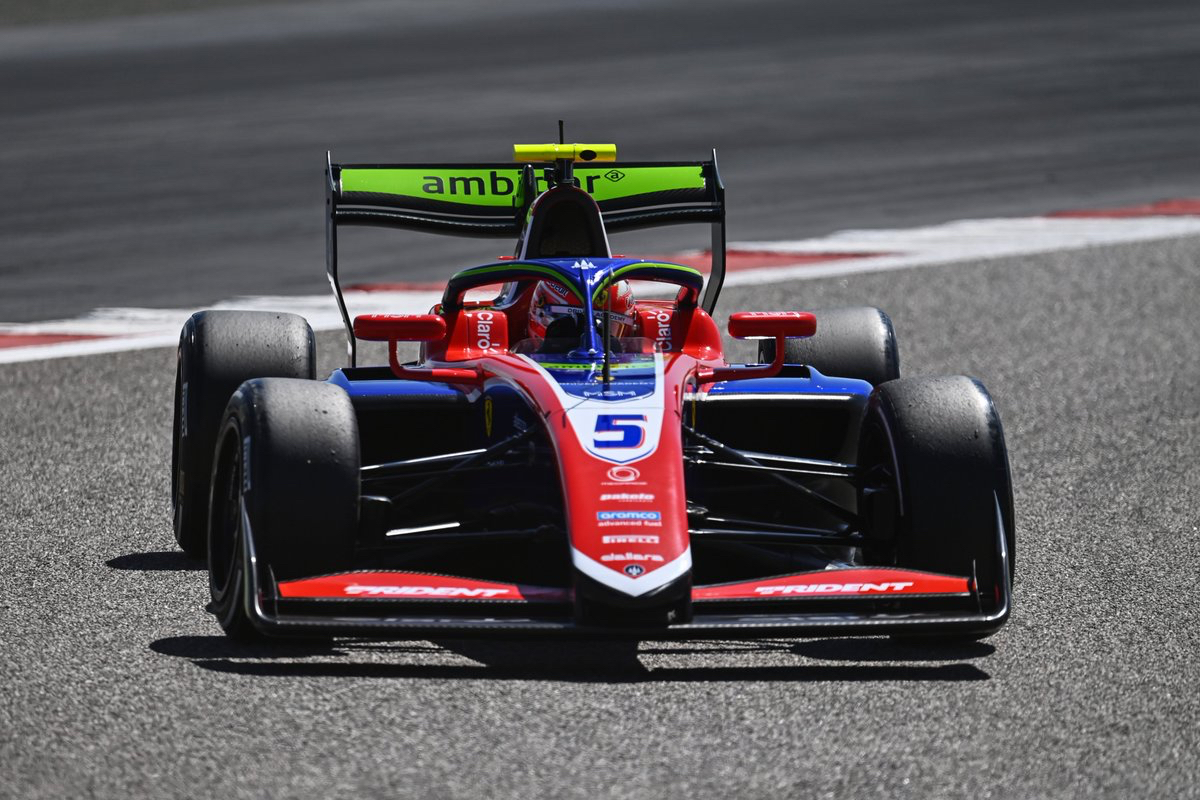
Rafael Camara
His team-mate Charlie Wurz qualified third at Bahrain, and he deemed pre-season simulator work “the most important part” of 2025 as he pointed out Trident’s drivers had already been learning from each other when in it. Formula Regional graduate Camara echoed that, and comments on feeling the collective value of having strong team-mates.
Bahrain’s track surface was “super dirty, super hot” according to AIX Racing’s Freddie Slater, and the safest approach every team could take was to use the lowest tyre pressures possible to delay the onset of degradation and overheating.
But Campos Racing, which was yet to find the warm-up breakthrough and been far from contending for pole, found those issues occurred rapidly anyway despite an in-season test at the track providing further learning time.
“From lap two, I was already struggling with the rears, so that I knew that it was going to be a long race,” said its sprint race winner Nikola Tsolov, who had qualified eighth and benefited from a reversed grid for that race result.
“I tried to save them as much as possible. Then the degradation went forwards. I was struggling with fronts at some point on braking, and it was just a mess, a little bit of deg everywhere, which made life difficult.”
Only slightly ahead in qualifying, but finishing in the top four of both Bahrain races was Tuukka Taponen and he was proud that his team ART Grand Prix made a “good step up from Melbourne” where it went points-free and Taponen qualified 24th.
The one-month gap before round three at Imola left plenty of time for data analysis, but also to have a break as the Monaco and Barcelona rounds were in the weekends immediately following Imola.
Rodin Motorsport’s Callum Voisin called the calendar’s triple-header “very mentally challenging by the end”, but there was not a performance drop-off trend in the paddock across the three events since teams mostly became more competitive.
Qualifying
| Driver | Mean start pos. | Median start pos. | Standard dev. of start pos. |
|---|---|---|---|
| Camara | 5.8 | 1.5 | 8.67 |
| Tsolov | 7.1 | 6.0 | 6.47 |
| Stromsted | 9.5 | 9.5 | 5.52 |
| Ugochukwu | 10.4 | 7.5 | 7.98 |
| Benavides | 10.8 | 13.5 | 7.69 |
| Bilinski | 10.8 | 10.5 | 5.88 |
| Wurz | 10.8 | 8.0 | 7.17 |
| Tramnitz | 10.9 | 12.0 | 4.13 |
| Slater | 11.0 | 11.0 | 1.00 |
| Stenshorne | 11.4 | 10.5 | 4.22 |
| Giusti | 11.7 | 11.5 | 3.69 |
| Boya | 12.3 | 14.5 | 6.83 |
| Taponen | 12.9 | 9.0 | 8.47 |
| Leon | 13.1 | 13.5 | 6.76 |
| Inthraphuvasak | 13.2 | 12.0 | 7.57 |
| Voisin | 14.2 | 17.0 | 9.02 |
| Nael | 14.9 | 20.0 | 8.08 |
| van Hoepen | 15.0 | 17.0 | 6.39 |
| Dufek | 15.0 | 14.5 | 2.74 |
| Ramos | 16.0 | 16.0 | 8.68 |
| Badoer | 17.1 | 15.5 | 6.32 |
| Sagrera | 17.5 | 17.5 | 2.50 |
| del Pino | 18.0 | 21.0 | 8.99 |
| Wharton | 18.6 | 20.0 | 5.06 |
| Sharp | 18.7 | 19.5 | 6.28 |
| Ho | 18.9 | 21.5 | 7.02 |
| Domingues | 20.3 | 21.5 | 6.02 |
| Zagazeta | 21.7 | 24.0 | 6.69 |
| Xie | 23.5 | 26.0 | 7.30 |
| Carrasquedo | 24.5 | 24.5 | 1.50 |
| Lacorte | 24.6 | 26.0 | 4.88 |
| Hedley | 24.6 | 26.0 | 6.09 |
| Johnson | 25.3 | 27.5 | 5.54 |
| Marinangeli | 28.4 | 28.5 | 1.11 |
green text signifies top 10 in metric, red text signifies bottom 10
Campos continued its qualifying struggles, although Tsolov and team-mate Mari Boya were the top two in Monaco and converted that into first and third in the feature race. At Imola, Tsolov had said “we’re only improving each time we go out on track, so we keep finding a lot of new things,” and felt his Monaco weekend went right from the start.
The strong Monaco results showed confidence with the car but also with the famed street circuit. Other drivers lacked that, were more heavily impacted by the tricky to navigate traffic and conceded performance through caution. Boya was frank that Campos was still “losing a bit” over a lap but “especially in the races, I would say we are the most competitive ones”.
With overtaking almost impossible, and with some drivers backing off during the races to create fresh air for themselves and go for fastest lap, it masked where teams were still trailing in single-lap or long-run pace.
“We thought Trident was unstoppable, especially in the beginning of the season. But they have weak points as well. We can tell the last two rounds they’ve been having their flaws,” Tsolov remarked at the time.
Ramos had successfully pressured Camara into overworking his tyres to win the Imola feature race, with Camara later being asked to let team-mate Stromsted past. In Monaco, Stromsted crashed in practice and Trident’s highest-placed driver on the feature race grid was Wurz in seventh. Camara lined up 11th after being penalised three places for not meeting the minimum delta time under red flag conditions.
But the points leader headed to Barcelona “quite, quite relaxed” and proceeded to top practice, qualifying and win the feature race yet again. Tsolov was 10th in practice, and not on course to do much better in qualifying until he made the needed procedural breakthrough late in the session. It was a moment his team-mates didn’t seem to benefit collectively from, unlike in other line-ups, and one where the driver led the way rather than Tsolov’s engineer who he previously had in Spanish Formula 4.

Nikola Tsolov
“Before the weekend, I thought we were going to be really strong, but then things changed and we haven’t been finding what we need until the last [tyre] set where we did. I did. I did something really different, so I’m glad it worked out.”
Tsolov jumped to second with his final lap, and team-mates Mari Boya and Tasanapol Inthraphuvasak were 15th and 16th. In rounds one to four, Tsolov’s average grid position for feature races was 8.5. In the next four it was 2.8, and Camara’s was 3.3.
A slow start consigned Tsolov to finishing eighth in the Barcelona feature race, and while he was on the sprint race podium his feedback was similar to Bahrain after using his “bad” set of tyres.
“It was quite difficult. We had a lot of oversteer, even following [other cars], and it was just a bit about surviving at some point. I was quite close to spinning off in a few corners, which is not usual.”
Despite Ramos having already delivered VAR a sprint race and feature race victory earlier in the year, Theophile Nael felt the team made a breakthrough at Barcelona. It was reflected by all three of VAR’s drivers qualifying in the top seven, Ivan Domingues leading home Ramos in the sprint race then Nael starring in the feature race by having his tyres well prepared for a safety car restart where he went around the outside of ART GP’s Laurens van Hoepen to take second place.
“We were missing something in Monaco and Imola. I think we found what’s happened and we did something really good on the car this weekend and hopefully we can manage to do it again in the second part of the season,” Nael said at the time.
Round six at the Red Bull Ring took place four weeks later, and this time it was Tsolov who topped practice, qualifying and dominated the feature race. After taking pole, he was quick to remind media why he was now qualifying at the front.
“In Barcelona we had an issue in [tyre] set one and two. I was not really fast, and then I did different things on the warm-up in set three which pumped me up to P2. So then we had time to analyse, which was good, and I think we found most of the things we need.”

Noah Stromsted
Brad Benavides was second fastest in Red Bull Ring qualifying – as AIX Racing showed its advantage at ‘power tracks’ which has been evident in Formula 2 and FIA F3 – 0.176 seconds off pole and 0.002s ahead of Stromsted. While most went for two runs, each featuring two sighting laps then two to three flying laps, Stromsted took a different approach after a mistake-filled first run.
“Instead of doing a cooldown lap and then going for a third push, I decided to box, and put on a new set of tyres to do one push lap. That was more about getting the feeling in the car [with] the track with the soft tyres. And it worked quite well. Then we went with everyone in the end, on our third set of tyres. And I left it for the last lap [to go for pole].”
ART GP struggled for pace at the Red Bull Ring, as would also occur at Spa-Francorchamps and to a lesser degree at Monza, but James Wharton was victorious in the sprint race as qualifying 12th put him on reversed-grid pole.
“I feel some teams have got it quite easy. They put the car down in Barcelona pre-season test and were fast. But we’ve had to work quite hard,” he told Formula Scout. “I spent nearly six days in a row on the sim in ART trying to prepare for these next couple of races.”
There was a twist in the title fight the next day, as Tsolov was disqualified from victory due to his front plank being below the minimum accepted thickness. The plank itself was damaged, but since Campos couldn’t prove to stewards that the damage induced the excessive wear, nor identify an event that triggered the damage, it couldn’t prevent Tsolov being removed from the race results. That meant Camara left the track 24 points clear rather than leading Tsolov by just one point.
Camara had showed suprerior race pace (measured over a consecutive run of 10 laps) while chasing Tsolov in the race, but that worked his tyres too hard and he then suffered a drop-off that consigned him to finishing sixth on-the-road. It contrasted heavily to Barcelona, since this time Tsolov was able to maintain a strong pace around the high-speed bends late into the 26-lap race. He lapped in the 1m24s in three of the last four laps, a pace only team-mate Boya in fourth could match on his starting set of tyres. Only eight drivers in total were able to go sub-1m25s even once after their rubber was 20 laps old.
Rolling race pace average
| Pos | Driver | Pace | Pos | Driver | Pace | Pos | Driver | Pace |
|---|---|---|---|---|---|---|---|---|
| 1 | Camara | 100.306% | 12 | Taponen | 100.824% | 23 | Domingues | 101.142% |
| 2 | Boya | 100.432% | 13 | Leon | 100.842% | 24 | Ho | 101.176% |
| 3 | Tsolov | 100.524% | 14 | Bilinski | 100.902% | 25 | Johnson | 101.253% |
| 4 | van Hoepen | 100.577% | 15 | Benavides | 100.970% | 26 | Zagazeta | 101.317% |
| 5 | Stromsted | 100.616% | 16 | Ugochukwu | 100.977% | 27 | Carrasquedo | 101.360% |
| 6 | Tramnitz | 100.694% | 17 | Wharton | 101.020% | 28 | Dufek | 101.370% |
| 7 | Stenshorne | 100.724% | 18 | Badoer | 101.022% | 29 | Xie | 101.374% |
| 8 | Inthraphuvasak | 100.724% | 19 | Ramos | 101.060% | 30 | Lacorte | 101.519% |
| 9 | Giusti | 100.733% | 20 | Hedley | 101.086% | 31 | del Pino | 101.625% |
| 10 | Wurz | 100.758% | 21 | Voisin | 101.113% | 32 | Marinangeli | 101.633% |
| 11 | Nael | 100.759% | 22 | Sharp | 101.127% |
Driver did less than three rounds. No average when only one event attended
There were 13 races across the season (taking in all tracks bar Melbourne) which featured enough uninterrupted green flag running for rolling race pace to be calculated, and the advantage of clean air while leading meant the on-the-road winner was quickest every time bar Camara’s costly on-the-limit laptimes at the Red Bull Ring and in the Hungaroring sprint race where Prema’s Ugo Ugochukwu went from sixth to second in the 11 laps between safety car periods.
Since his sole retirement was in Melbourne, and he had no races where laptimes lost to track limits violations prevented a 10-lap rolling average from being formed, Voisin was the sole driver whose season average for race pace was taken from 13 races.
He came 14th in the championship and was 21st on average race pace, but the order (seen in the table above) mostly reflected the championship. One or two high-scoring races can easily lift a driver up the points table while their average pace would put them in a far lower position for the season, and much rarer this year was a driver whose pace was consistently strong but wasn’t reflected by their championship position.
Van Hoepen was such an outlier, who on race pace had an average deficit to the fastest driver only bettered by Camara, Boya and Tsolov yet came 12th in the standings. The Barcelona sprint race was the only time van Hoepen showed the pace to win, but the only time his pace was over 101% of the benchmark was the Monaco feature race and he still finished that in sixth.
After finishing third in the sprint race there, FIA F3 sophomore van Hoepen said “this year has been a way harder start for me than” in 2024 despite being with the same team.
The three ahead of van Hoepen on race pace were consistent, repeatedly maximised their pace once they knew how to and it was shown by their averages all bettering the fastest driver in races from 2024 when a win-free driver was champion.
Points scored
| Feature races | Sprint races | ||||
|---|---|---|---|---|---|
| Pos | Driver | Points | Pos | Driver | Points |
| 1 | Camara | 138 | 1 | Stenshorne | 54 |
| 2 | Boya | 85 | 2 | Tsolov | 44 |
| 3 | Tsolov | 75 | 3 | Inthraphuvasak | 42 |
| 4 | Tramnitz | 68 | 4 | Giusti | 32 |
| 5 | Stromsted | 63 | 5 | Boya | 31 |
| 6 | Nael | 58 | 6 | van Hoepen | 30 |
| 7 | Taponen | 46 | 7 | Ugochukwu | 30 |
| 8 | Bilinski | 40 | 8 | Tramnitz | 26 |
| 9 | Stenshorne | 35 | 9 | Bilinski | 25 |
| 10 | Giusti | 35 | 10 | Wurz | 25 |
| 11 | Voisin | 35 | 11 | Stromsted | 21 |
| 12 | Inthraphuvasak | 32 | 12 | Taponen | 21 |
| 13 | van Hoepen | 30 | 13 | Ramos | 20 |
| 14 | Wurz | 28 | 14 | Wharton | 19 |
| 15 | Ramos | 28 | 15 | Camara | 18 |
Green text signifies sprint race tally exceeding feature race tally
A driver with big contrasts was Inthraphuvasak. He on average was the 18th fastest on absolute pace, and his average starting position for feature races in the season’s first half was 18.2. In the second half it was 8.2, he was on reversed-grid pole twice and that helped him become 2025’s third-highest scoring driver in sprint races and eighth fastest on race pace.
His first win was at Silverstone, where Campos was rapid and he didn’t initially maximise it. Tsolov took pole, Boya was fourth fastest and he was 12th in qualifying.
“My pace has always been there to be in top five,” he claimed after sprint race victory. “It’s just about putting things together, and we struggled with that so far. This weekend, again qualifying a bit unlucky, with a problem and a mistake from my side.”
Hitech GP’s Martinius Stenshorne — sixth on absolute pace and seventh on race pace — finished runner-up to Inthraphuvasak from sixth on the grid in a charging drive. It contributed to the 54 points he scored in sprint races, a tally last reached by a driver in 2021, and like the Campos driver he was enjoying an upwards shift.
Stenshorne said “in the beginning of the season we struggled a bit for race pace”, or “a bit up and down”, but from the Red Bull Ring onwards he was happy with it and he rose from 11th in the standings to fifth in the season’s second half.
Two of the last three rounds were on tracks with long straights, Spa-Francorchamps and Monza, and Benavides was on pole at both. While his AIX team-mates were outside of the top 27 on the grid, Benavides’s pace was genuinely representative of the team’s competitiveness at these circuits in Formula 1’s support series.
Those results helped Benavides be the fourth fastest driver in 2025 on single-lap pace, and the abandonment of the Spa feature race after two laps (both behind the safety car) meant no points and no chance to improve his race pace average.

Brad Benavides
The American’s average start position was 18th in the season’s first half, then 6.4 in the second half. He only scored twice, with his ninth place at the Red Bull Ring followed by fourth in the season-ending Monza feature race in which he led six green flag laps before falling down the order.
Ugochukwu was another driver to cite the Red Bull Ring for a “big turnaround”, particularly in race pace. The laptimes supported his comments, and he went on to finish second in two sprint races which he started from outside the top five. While his single-lap pace was 10th best in the field, still the highest-placed Prema driver, he had the fourth-best average starting position for feature races. It was 15.8 in the season’s first half, then fifth from the Red Bull Ring, where Ugochukwu’s car shed its orange paint to help him meet the minimum weight limit.
One garage which had a less productive time as the year went on but still placed strongly on pace and points was MP Motorsport. Tim Tramnitz said the team “weren’t so happy with the start of the year” due to needing to go on recovery drives, but he came fourth in the championship and team-mate Alessandro Giusti was 10th.
Almost three quarters of Tramnitz’s points came prior to the Red Bull Ring though, with a single point from the last four rounds, while Giusti’s nine-race scoring run was followed by one point in five races. MP was still third in the teams’ standings.
Laps led
1 Camara 97 2 Tsolov 62 3 Inthraphuvasak 39 4 Stenshorne 31 5 Ramos 27 6 Tramnitz 26 =7 Domingues & Wharton 21 9 Benavides 15 10 Boya 12 =11 Slater & Stromsted 10 =13 Voisin & Nael 4 =15 Dufek & del Pino 2 17 Ugochukwu 1